
Restaurant Ordering App Development: What Every UK Restaurant Should Plan

By Abhimanyu Singh
Senior Software Development Engineer (SSDE)
Quick Summary
Restaurant ordering apps are no longer just a convenience feature. In 2026, they have become an important growth channel for restaurants looking to increase direct orders, improve customer loyalty, reduce dependence on third-party delivery platforms, and create better dining experiences. This guide explores the key features, costs, benefits, and trends shaping restaurant ordering app development in the UK.
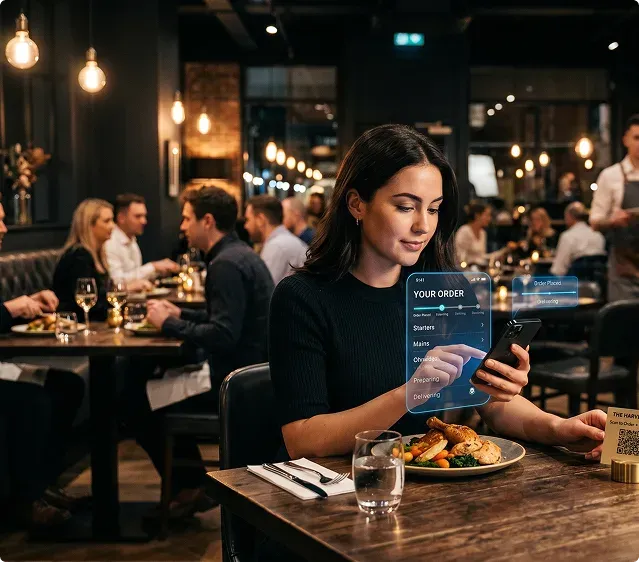
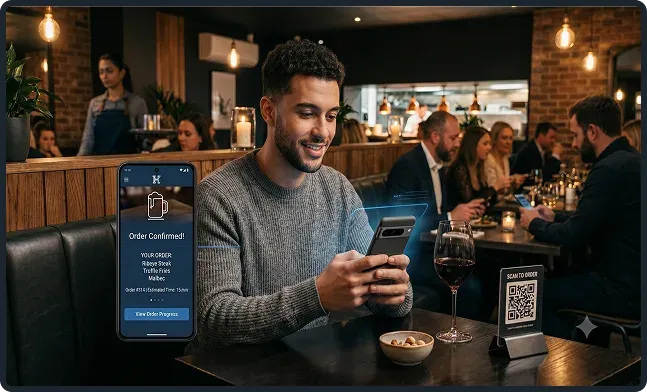
Customers are scanning QR codes, checking menus on their phones, placing takeaway orders before they arrive, and expecting updates in real time. For many people, ordering food has started to feel more like booking a taxi or shopping online than the traditional restaurant experience.
That shift has changed how restaurants operate. A few years ago, having a website was enough. Today, many restaurants are exploring restaurant ordering app development UK solutions because customer expectations have moved far beyond basic online presence.
People want convenience, speed, and a smoother experience from the moment they decide to order. This is why restaurant apps are becoming an important part of restaurant growth strategies in 2026.
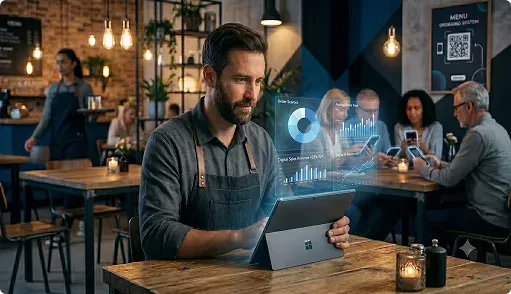
Many businesses are also investing in broader hospitality software development services to improve customer experiences, reservations, loyalty programs, and operational efficiency across multiple customer touchpoints.
Why Restaurants Are Investing in Ordering Apps in 2026
Restaurants are dealing with a different customer than they were five years ago. People are comfortable doing everything from their phones. They book holidays, manage their banking, order groceries, and expect food ordering to be just as simple.
At the same time, restaurants face rising labour costs, growing competition, and increasing pressure from third-party delivery platforms.
This is where restaurant ordering app development UK becomes valuable. A dedicated restaurant app creates a direct relationship between the business and its customers. Instead of depending entirely on marketplaces, restaurants gain their own channel for orders, promotions, loyalty rewards, and customer engagement. That level of ownership is becoming increasingly important in 2026.
What Customers Expect From Restaurant Apps Today
The average customer does not want friction. They want to browse the menu, place an order, pay, and receive updates without having to call anyone. This is why successful restaurant mobile app development projects focus heavily on simplicity.
Customers expect:
- Fast ordering
- Secure payments
- Order tracking
- Loyalty rewards
- Personalised offers
- Multiple payment options
Restaurants that make ordering easier often see stronger customer retention because convenience becomes part of the overall experience.
The same trend can be seen across hotels investing in digital guest experiences through mobile applications.
Essential Features Every Restaurant Ordering App Needs
A successful online food ordering app does much more than process transactions. The best restaurant apps create a smoother experience for customers while reducing operational complexity for staff.
Key features typically include:
- Digital menu management
- Secure payment processing
- Online ordering
- Pre-order scheduling
- Push notifications
- Customer accounts
- Loyalty programs
- Delivery tracking
- Pickup scheduling
- POS integrations
Many restaurants also connect these features with broader restaurant automation initiatives to reduce manual work and improve operational efficiency.
When ordering, kitchen management, and customer communication work together, restaurants spend less time managing processes and more time serving customers.
Custom Restaurant Apps vs Third-Party Delivery Platforms
Delivery marketplaces have helped thousands of restaurants reach new customers. The challenge is that they also create dependence.
Restaurants often have limited control over customer data, branding opportunities, and communication. Commission fees can also reduce profitability significantly over time.
That does not mean restaurants should avoid delivery platforms. Many successful businesses use both approaches.
Third-party platforms help attract customers. A custom restaurant app helps keep them.
This is where owning the customer relationship becomes valuable. Loyalty programs, personalised promotions, and direct communication become much easier when customers order through your own platform.
Industry organisations such as UK Hospitality continue to discuss how digital channels are reshaping customer engagement across the hospitality sector.
Restaurant App Development Cost UK: What Affects Pricing?
One of the most common questions around restaurant ordering app development UK is cost.
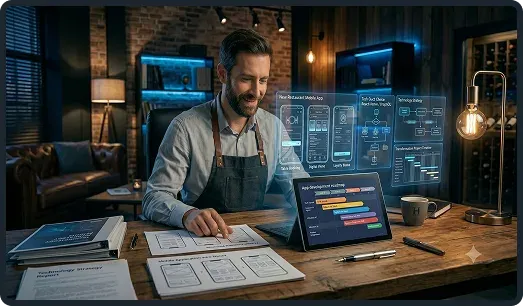
The answer depends entirely on what the restaurant wants the application to do. A simple ordering application will cost less than a platform that includes delivery management, loyalty systems, analytics, personalised offers, and multiple integrations.
Factors that typically influence restaurant app development cost UK include:
- Feature requirements
- Payment gateway integrations
- Delivery management functionality
- Loyalty program complexity
- Customer account systems
- Reporting and analytics
- Security requirements
The better question is often not "How much does it cost?" but "How much value will it create?"
An app that increases direct orders and improves customer retention often delivers value long after launch.
Future Trends in Restaurant Ordering App Development UK
The next phase of restaurant ordering app development UK is focused on convenience and personalisation.
Restaurants are investing in:
- AI-driven recommendations
- Smart loyalty systems
- Personalised promotions
- Integrated feedback collection
- Contactless ordering
- Faster checkout experiences
The goal is not to add technology for the sake of it. The goal is to remove friction wherever possible.
This broader move toward digital-first customer experiences can also be seen in the UK's long-term digital transformation initiatives.
As customer expectations continue to rise, restaurants that simplify the ordering experience will have a clear advantage.
Before launch, work through the restaurant automation exception checklist, including duplicate submissions, failed payments, cancellations, and lost connectivity.
Where Trudosys Fits In
Every restaurant operates differently. Some focus heavily on delivery. Others prioritise dine-in experiences. Some run a single location while others manage multiple outlets with complex operational requirements.
Because of this, generic platforms do not always fit.
Trudosys works with hospitality businesses to build solutions around how they actually operate. Whether it is direct ordering, loyalty programs, customer engagement, delivery workflows, or integrations with existing systems, the focus is on creating technology that supports the restaurant rather than forcing the restaurant to adapt to the technology.
Businesses looking for hospitality-focused technology can explore Trudosys' dedicated hospitality solutions.
For broader market context, read why European hospitality businesses feel more operational pressure.
Restaurants planning larger digital transformation projects can also explore our services.
Frequently Asked Questions
Final Thoughts
The restaurants seeing the strongest digital growth in 2026 are not necessarily the ones with the biggest marketing budgets. They are the ones making it easier for customers to order.
The demand for restaurant ordering app development UK continues to grow because customers increasingly expect convenience, speed, and personalised experiences.
For restaurant owners, an app is no longer just another technology project. It is becoming a direct channel for customer relationships, repeat business, and long-term growth.
Behind many successful restaurant apps sits a wider investment in workflow automation and operational efficiency.
As customer expectations continue to evolve, restaurants that invest in better digital experiences today will be in a much stronger position tomorrow.

Abhimanyu Singh
Senior Software Development Engineer (SSDE)
Abhimanyu Singh is a Senior Software Development Engineer with approximately four years of experience building and maintaining mobile, web, and enterprise applications. His expertise spans Flutter, Android, application architecture, and cloud integrations. He has contributed to task management, work order, reporting, and document processing systems, with a focus on maintainable code, application performance, and dependable user experiences. His work across React, TypeScript, and backend integrations gives him a practical understanding of software delivery from interface development through production support.
LinkedIn