
Why European Hospitality Businesses Are Under More Pressure Than Ever

By Sanjana Rao
UI/UX Designer
Quick Summary
This guide explains why European hospitality businesses are under greater operational pressure in 2026, the factors contributing to that pressure, and how connected software helps improve efficiency and day-to-day operations.
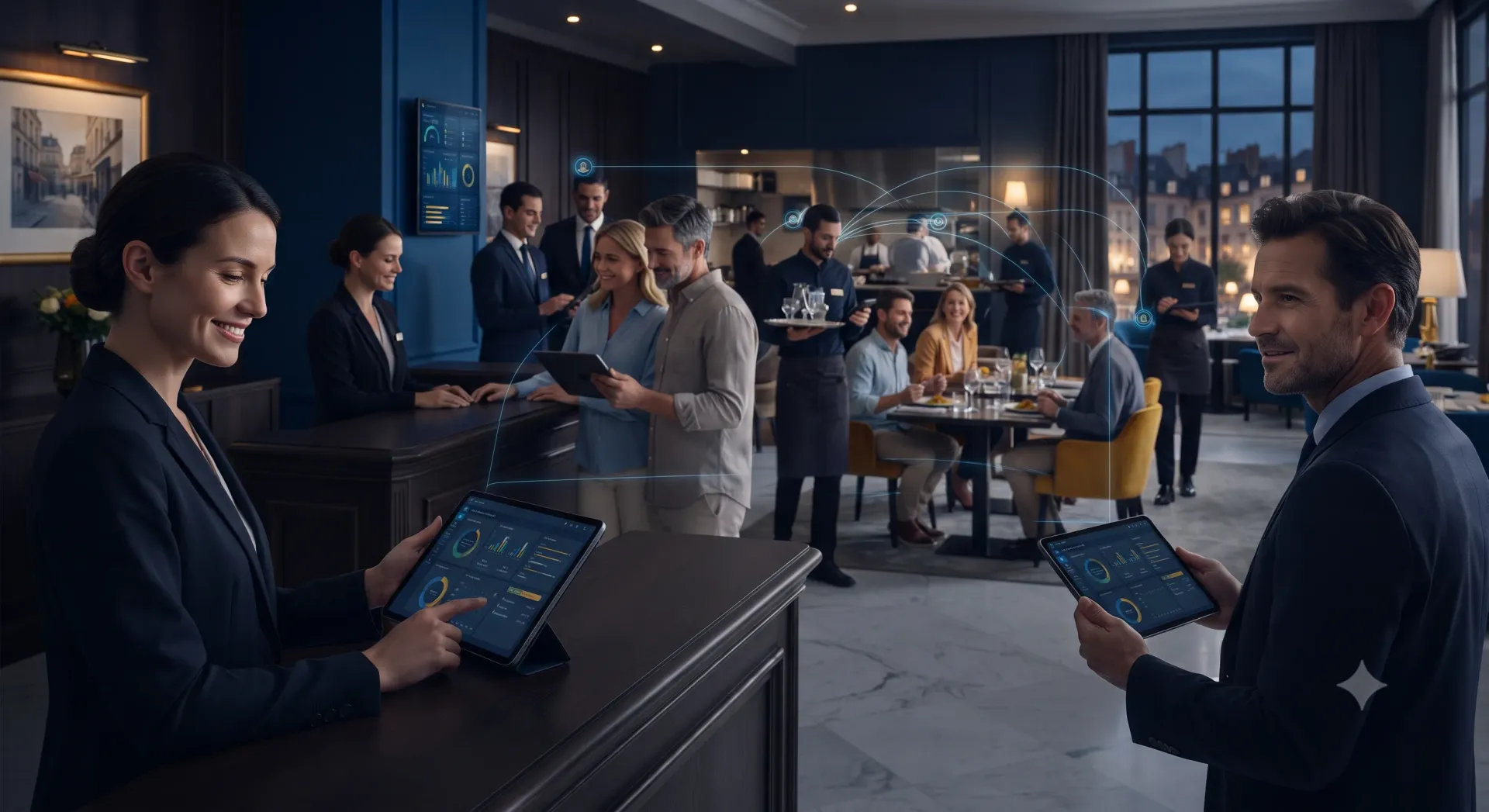
Walk into a busy hotel or restaurant today and, at first glance, everything looks normal.
Guests are checking in.
Tables are full.
Housekeeping teams are moving between rooms.
Reception staff are answering questions while helping the next guest in line.
Business appears healthy.
Yet speak to the people running those operations and a different picture often emerges.
Many hospitality businesses are serving more guests while also managing tighter margins, higher expectations, staffing pressures, and increasingly complex day-to-day operations. Recent European hospitality reports describe the sector as resilient, but operating under growing pressure to deliver consistent service with leaner teams.
That is one reason more businesses are reviewing how work happens behind the scenes instead of focusing only on front-of-house experiences.
Many operators are also investing in dedicated hospitality software development services to connect reservations, guest communication, housekeeping, reporting, and operational workflows.
Hospitality Is Busy Again, but It Feels Different
Travel demand has recovered across much of Europe.
For many hotels, restaurants, and hospitality groups, the challenge is no longer attracting guests.
It is delivering the same level of service consistently every single day.
Guests expect faster responses.
Bookings arrive through multiple channels.
Teams coordinate housekeeping, maintenance, reservations, events, suppliers, and guest requests simultaneously.
Each part of the business depends on another.
Hospitality trends for 2026 increasingly focus on operational consistency rather than simply increasing bookings.
Guest Expectations Keep Rising
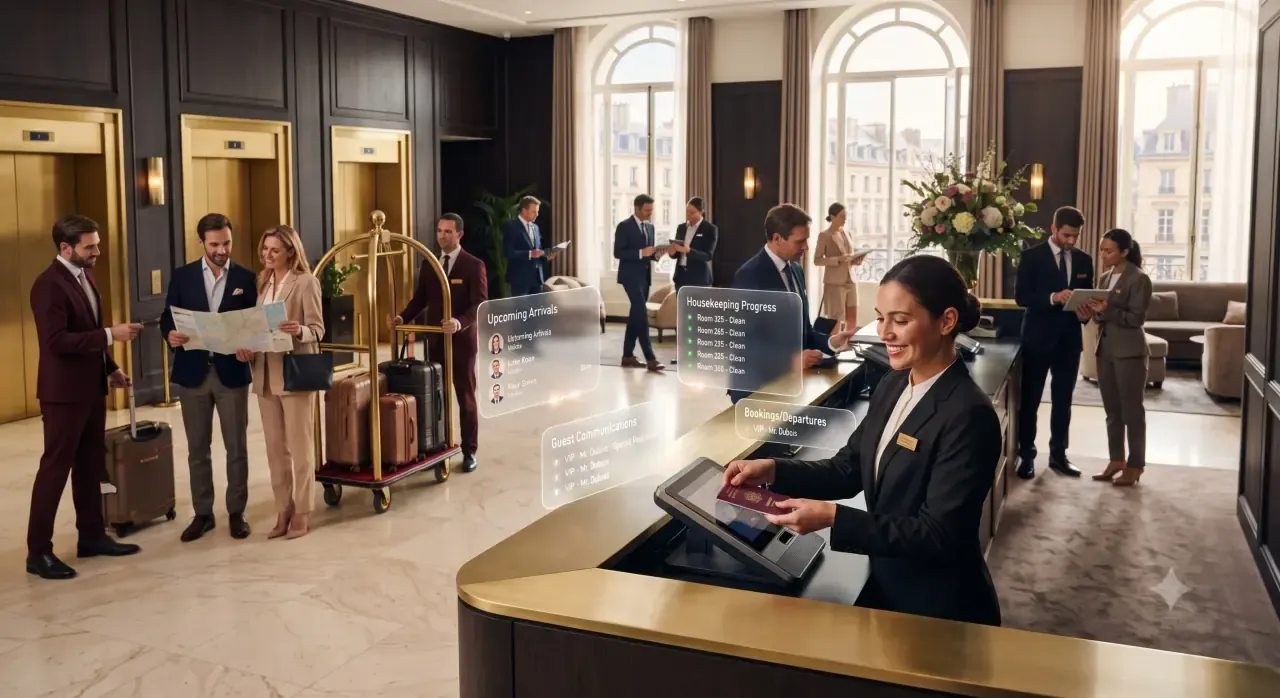
Today's guests compare hospitality experiences with every other digital service they use.
They expect confirmation emails immediately.
They want digital check-in options.
They expect accurate booking information.
Many also assume someone already knows their preferences before they arrive.
These expectations continue to grow even when staffing levels remain tight.
This is why many hospitality businesses are improving guest journeys long before guests reach reception.
Mobile applications, digital communication, and connected booking experiences are becoming everyday operational tools rather than premium extras.
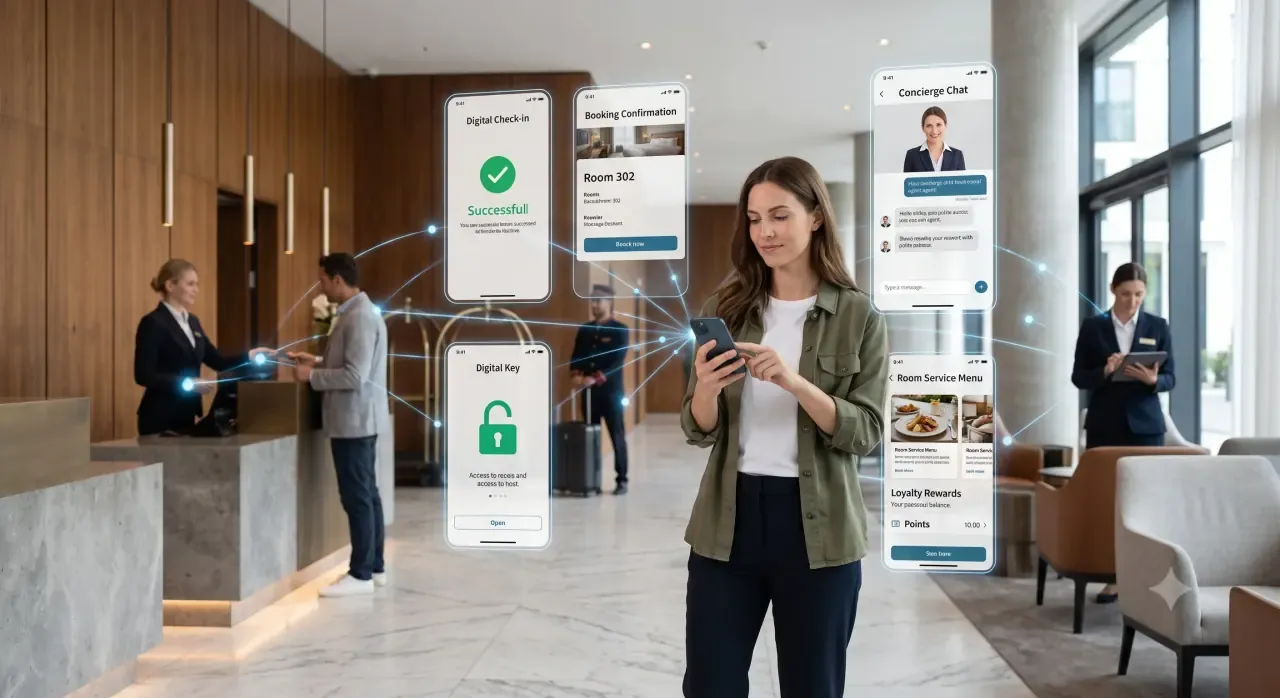
Many of the same ideas are explored in hotel app development, where digital experiences begin before check-in.
Restaurant operators facing similar self-service expectations can also review restaurant ordering app development.
Small Operational Delays Add Up Quickly
Hospitality teams rarely struggle because of one major problem.
Instead, they deal with dozens of small interruptions.
Housekeeping waits for room updates.
Reception follows up on maintenance requests.
Kitchen staff check availability manually.
Managers move information between different systems.
None of these tasks seem significant by themselves.
Across hundreds of guests each week, they quietly consume hours that could have been spent improving service.
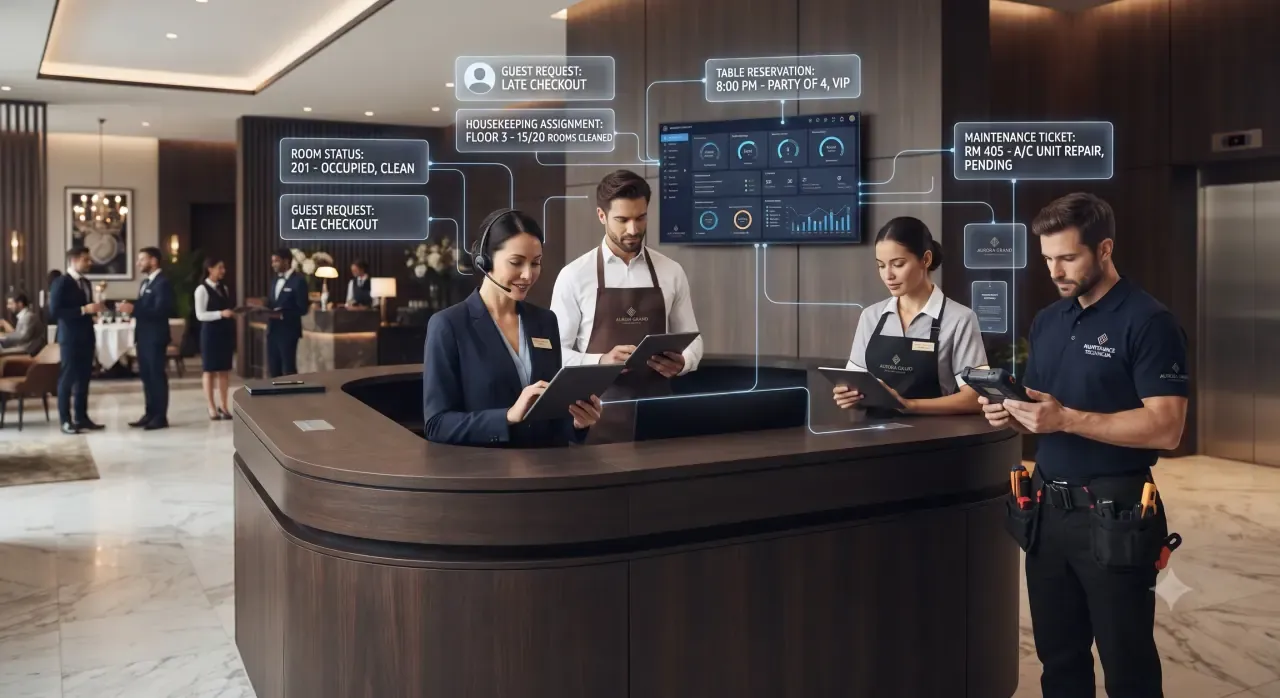
Connected workflows help reduce this operational friction by allowing information to move automatically instead of relying on repeated phone calls, messages, or manual updates.
Many hospitality businesses are applying broader business process automation principles to simplify these everyday interactions.
Better Systems Create Better Guest Experiences
Guests rarely notice good operational software.
They notice the results.
Rooms become available on time.
Special requests reach the right department.
Staff already know booking details.
Questions are answered quickly.
Technology works best when it quietly supports the people delivering hospitality rather than replacing them.
Across Europe, hospitality businesses are increasingly investing in automation and connected operations to improve consistency while allowing staff to spend more time with guests.
The goal is not to remove the human side of hospitality.
It is to give people more time for it.
Start with the Handoff Between Reception and Housekeeping
Map how a room moves from occupied to checked out, cleaning, inspected, and ready. Agree who can change each status and which system is authoritative. A housekeeping update should reach reception without someone repeating it in a message.
Test late check-outs, maintenance holds, room changes, and lost connectivity before rolling the workflow out. Keep an exception queue visible to a named shift owner, and provide a manual fallback when updates cannot sync.
During a pilot, compare time spent confirming room status and the number of conflicting updates. Review these with both teams so faster updates do not come at the expense of accurate readiness checks. This keeps the improvement specific to a guest-facing operational problem.
For restaurant operations within the same property, use the restaurant automation exception checklist to review order, payment, and kitchen handoffs separately.
Growth Should Not Create More Complexity
More bookings should be good news.
Yet many businesses discover that growth also creates more coordination.
More guests mean more room preparation.
More service requests.
More supplier activity.
More reporting.
Processes that worked well at a smaller scale often begin to slow down.
Businesses then face an important decision.
Continue adding manual work.
Or improve the systems supporting daily operations.
Many hospitality businesses are choosing the second option because connected operations make growth easier to manage without continually increasing administrative effort.
Where Trudosys Fits In
No two hospitality businesses operate in exactly the same way.
A boutique hotel manages different workflows from a restaurant group or a multi-property hospitality brand.
That is why Trudosys develops software around existing operational processes instead of asking teams to change how they already work.
Reservations, guest communication, housekeeping, reporting, approvals, mobile experiences, and operational workflows can all be connected into one system that supports both staff and guests.
Businesses looking to modernise hospitality operations can explore hospitality services. And for wider custom software and operational workflow solutions.
Frequently Asked Questions
Final Thoughts
Hospitality has always been about people.
That has not changed.
What has changed is everything happening around those people.
Guests expect more.
Operations move faster.
Teams coordinate across more systems than ever before.
The businesses performing best in 2026 are not necessarily working harder.
They are making everyday operations easier to manage.
When information moves smoothly at ease, the staff ends up spending less time chasing updates and more time delivering the actual experiences the guests actually remember.

Sanjana Rao
UI/UX Designer
Sanjana Rao is a UI/UX Designer with more than one year of experience designing digital products for business users. Her work includes SaaS websites, enterprise applications, CRM platforms, dashboards, and property management tools, with project experience in healthcare and construction. She translates complex workflows into clear interfaces and user journeys, balancing user needs with business requirements. Her approach combines thoughtful interaction design, consistent visual systems, and practical attention to how people complete everyday tasks.
Professional Experience: More than 1 year.
Industry and Project Experience: SaaS, enterprise software, CRM, healthcare, construction, and property management.
Technical Expertise: User experience and interface design, business workflow simplification, dashboards, user journeys, visual design, and consistent design systems.