
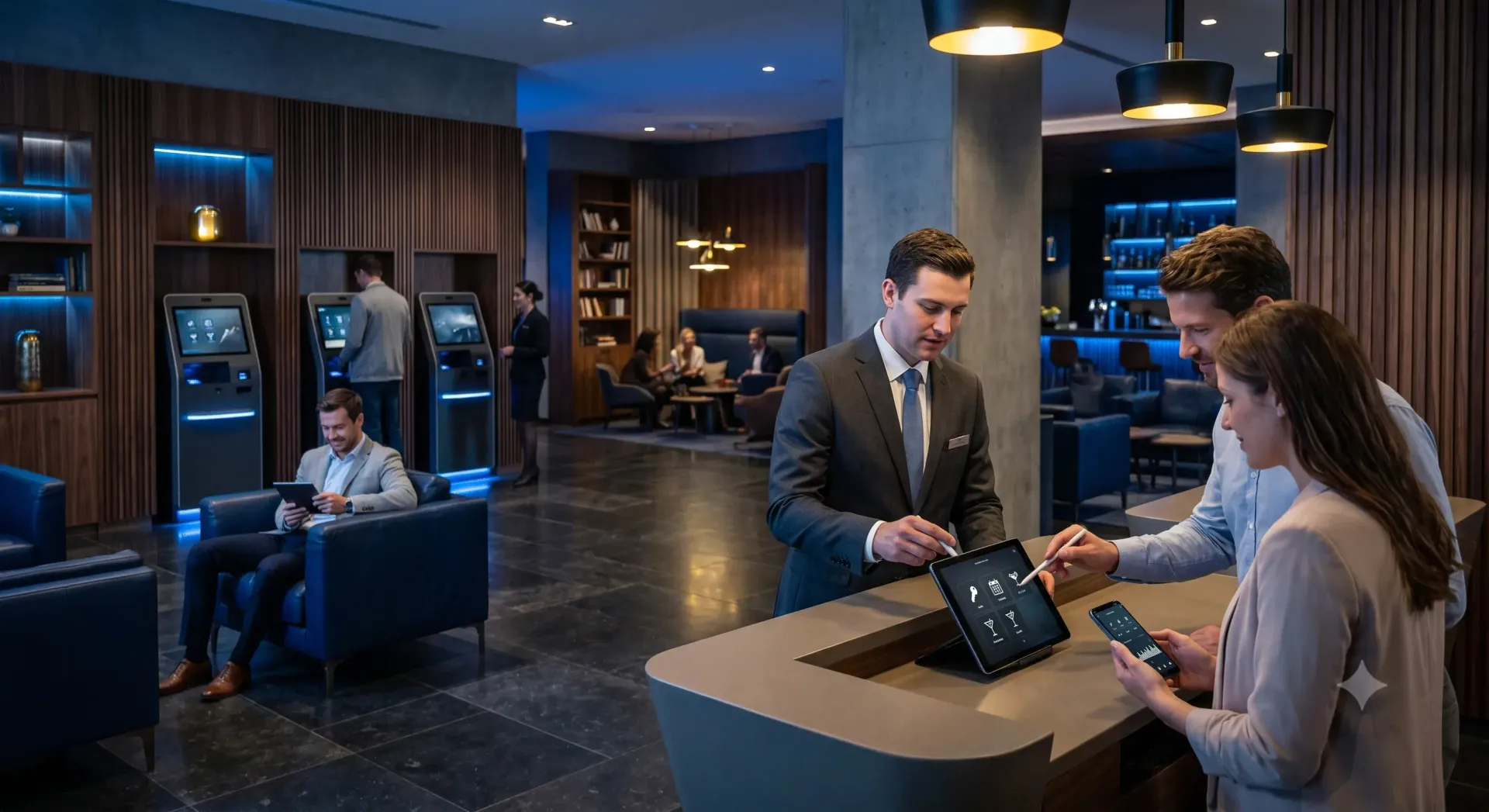
Hotel App Development: Building Better Guest Experiences

By Sanjana Rao
UI/UX Designer
Quick Summary
Guests expect convenience long before they arrive at a hotel. They book flights, check in online, and manage travel from their phones. Hotels are increasingly expected to offer the same level of convenience. This guide explores how hotel app development in the UK is helping hospitality businesses improve guest experiences, streamline operations, support direct bookings, and create smoother journeys from booking to checkout.
A guest can book a flight, choose a seat, check in online, receive gate updates, and download a boarding pass without speaking to anyone. Then they arrive at a hotel and sometimes have to queue at reception to ask basic questions.
That gap is one reason more hospitality businesses are exploring hotel app development UK projects in 2026.
Guests have become comfortable managing their journeys through their phones. They expect information quickly, updates in real time, and simple ways to access services.
Hotels are responding by investing in digital experiences that make stays smoother without creating extra work behind the scenes.
Many hospitality businesses are also expanding their wider digital capabilities through dedicated hospitality software development services.
Why Hotels Are Investing in Mobile Apps in 2026
Hotels are under pressure from both sides. Guests expect better experiences, while operations teams are expected to deliver those experiences efficiently.
This is where hotel app development UK becomes valuable.
A hotel app creates a direct channel between the hotel and the guest. Instead of relying entirely on emails, calls, or front desk interactions, information can be shared through a single digital experience.
Booking updates, check-in information, room requests, loyalty rewards, and service communication can all happen through one platform.
For hotels, this creates consistency. For guests, it removes friction.
What Guests Expect Before They Arrive
The guest experience no longer starts at check-in. It starts the moment someone confirms a booking.
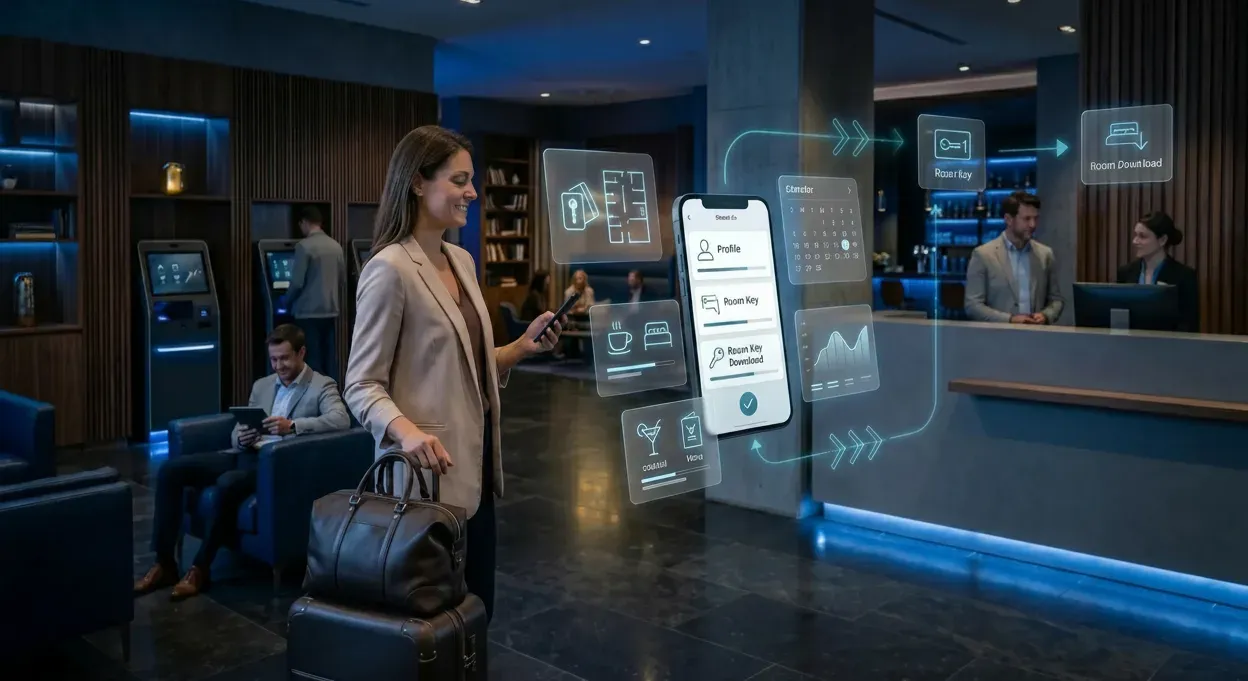
Guests want reassurance that everything is organised before they arrive. They want confirmation details, booking updates, directions, local information, and clear communication.
This is where a well-designed hotel guest experience app can make a significant difference.
Instead of searching through emails or calling reception, guests can access information when they need it.
The same expectation for convenience can be seen across hospitality. Restaurants, for example, are investing heavily in digital ordering experiences because customers increasingly expect self-service options.
The easier it is for guests to access information, the more confident they feel about their stay.
For the restaurant side of that trend, review the guide to restaurant ordering app development in the UK.
How Hotel Apps Improve Guest Experience During a Stay
Once guests arrive, convenience becomes even more important. Nobody wants to wait in line to request towels, ask about breakfast times, or find local recommendations.
Modern hotel mobile app development focuses on putting useful services directly into the guest's pocket.
Common features include:
- Digital check-in support
- Room service requests
- Concierge messaging
- Local attraction guides
- Loyalty rewards
- Service updates
- Checkout assistance
These features may seem small individually, but together they create a smoother experience.
Guests spend less time looking for information and more time enjoying their stay.
That improvement often translates into better reviews and stronger guest retention.
The Operational Benefits Hotels Often Overlook
Most conversations around hotel app development UK focus on guests. But hotels often discover that the biggest benefits happen behind the scenes.
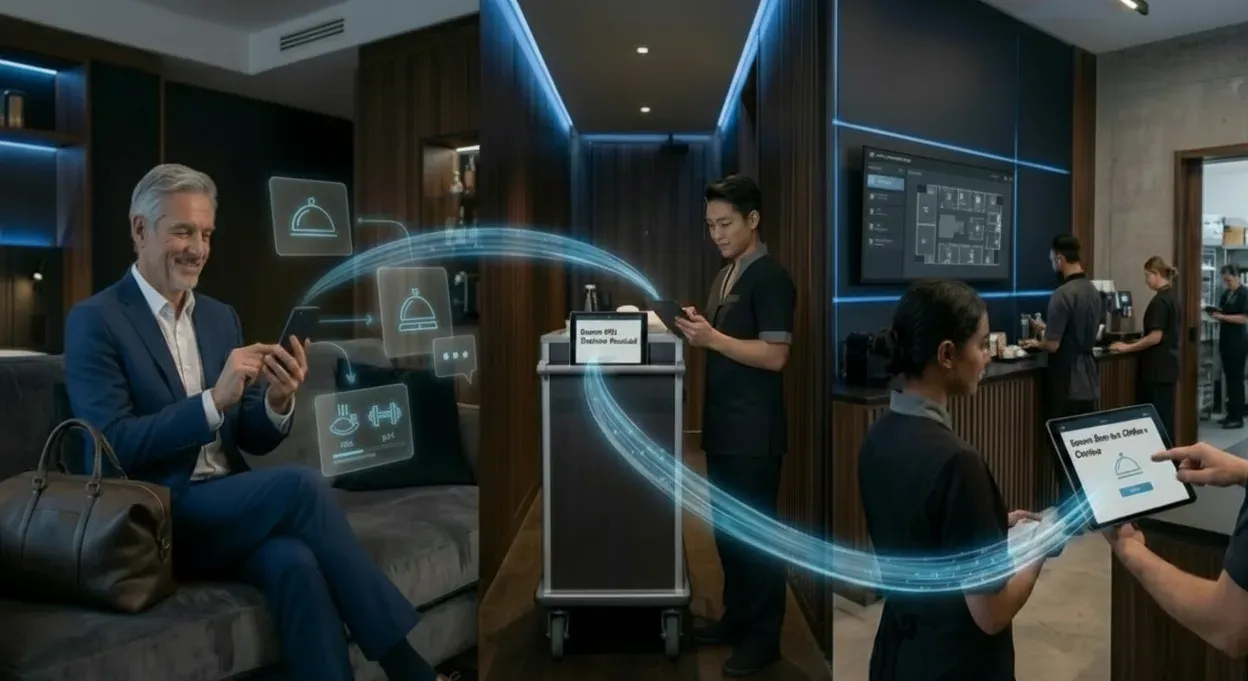
When guest requests arrive through structured workflows, teams gain visibility.
Requests can be assigned, prioritised, tracked, and completed more efficiently.
Housekeeping knows what needs attention. Maintenance receives clear requests. Management gains better visibility into service demand.
This is where workflow automation becomes important. The goal is not to remove people from the process. It is to remove unnecessary manual coordination.
The result is a cleaner operational flow that supports both staff and guests.
Hotel App Development Cost UK: What Influences Pricing?
One of the most common questions hotels ask is about hotel app development cost UK. There is no single answer because every hotel operates differently.
A small independent hotel will have different requirements than a multi-location hospitality group.
Factors that typically influence cost include:
- PMS integrations
- Booking engine integrations
- Loyalty programs
- Payment gateways
- Messaging functionality
- Reporting requirements
- Guest service features
- Security requirements
The scope of the project often has a greater impact on cost than the size of the hotel itself.
Hotels should focus on solving operational challenges first and adding advanced functionality over time.
Many successful projects begin with a focused MVP before expanding.
Trends Shaping Hotel App Development UK in 2026
Open several hotel apps today and you'll notice a common theme. They're all trying to remove steps.
Guests want fewer clicks, faster answers, and more personalised experiences.
This is influencing trends such as:
- Personalised recommendations
- Digital room access
- AI-assisted guest support
- Loyalty personalisation
- Contactless experiences
- Smarter guest communication
The broader hospitality industry continues to explore ways technology can improve guest experiences while supporting operational efficiency.
The hotels seeing the greatest success are usually the ones making things simpler rather than adding more complexity.
Where Trudosys Fits In
Every hotel operates differently. A boutique hotel has different requirements from a large chain. A resort has different operational demands than a city-centre property.
Because of this, generic solutions do not always fit.
Trudosys works with hospitality businesses to build applications around real guest journeys and operational workflows.
Whether the focus is booking management, guest communication, loyalty programs, service requests, reporting, or integrations, the goal is to create technology that supports the hotel rather than disrupting it.
Businesses looking for hospitality-focused solutions should start with the guest journey, PMS integrations, and day-to-day service workflows.
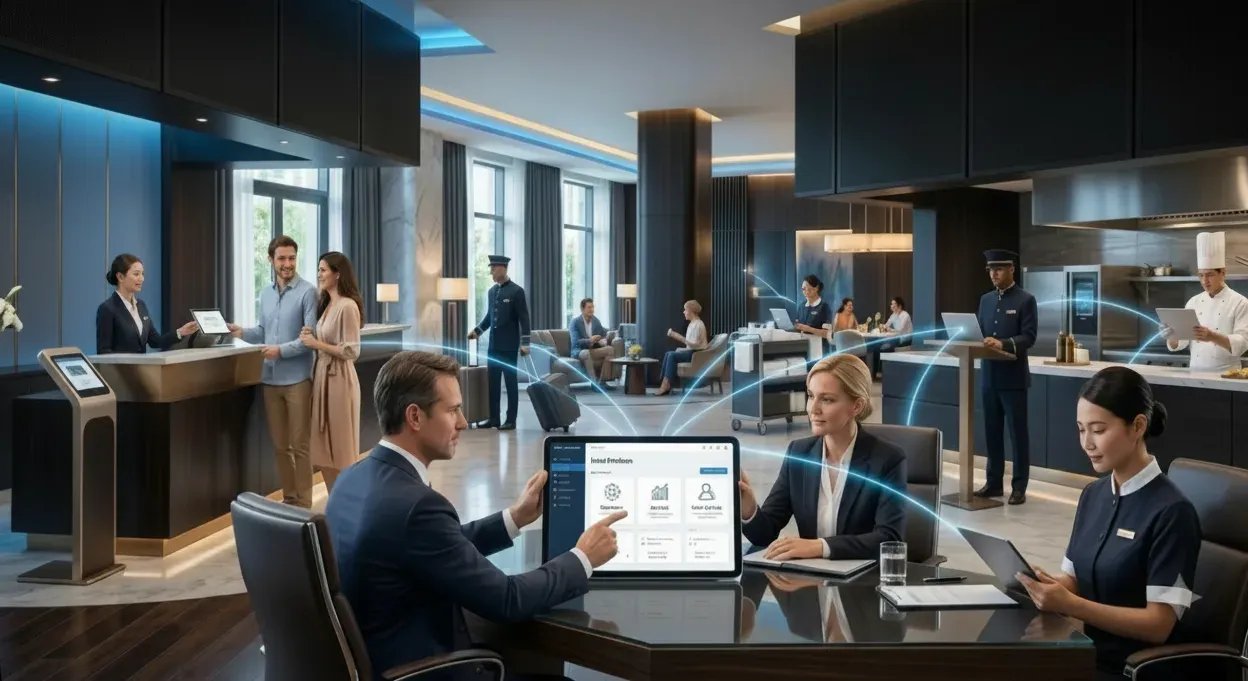
Explore hospitality software development services for hotel, restaurant, guest app, and operations workflows.
Hospitality leaders can also review why European hospitality businesses feel more operational pressure when guest expectations and staffing pressure rise together.
Frequently Asked Questions
Final Thoughts
The best hotel apps rarely stand out because of flashy features.
They stand out because they remove frustration.
Guests get information faster. Staff handle requests more efficiently. Communication becomes clearer. Service feels more organised.
That is why hotel app development UK continues to attract attention across the hospitality sector.
As guest expectations continue to evolve, hotels that make the experience simpler will have a clear advantage.
Many of the same operational improvements can also be seen in wider hospitality automation initiatives.
For a sector-wide view, see how hospitality businesses are handling operational pressure.
Technology works best when guests barely notice it. They simply feel that everything runs smoothly.

Sanjana Rao
UI/UX Designer
Sanjana Rao is a UI/UX Designer with more than one year of experience designing digital products for business users. Her work includes SaaS websites, enterprise applications, CRM platforms, dashboards, and property management tools, with project experience in healthcare and construction. She translates complex workflows into clear interfaces and user journeys, balancing user needs with business requirements. Her approach combines thoughtful interaction design, consistent visual systems, and practical attention to how people complete everyday tasks.
Professional Experience: More than 1 year.
Industry and Project Experience: SaaS, enterprise software, CRM, healthcare, construction, and property management.
Technical Expertise: User experience and interface design, business workflow simplification, dashboards, user journeys, visual design, and consistent design systems.