
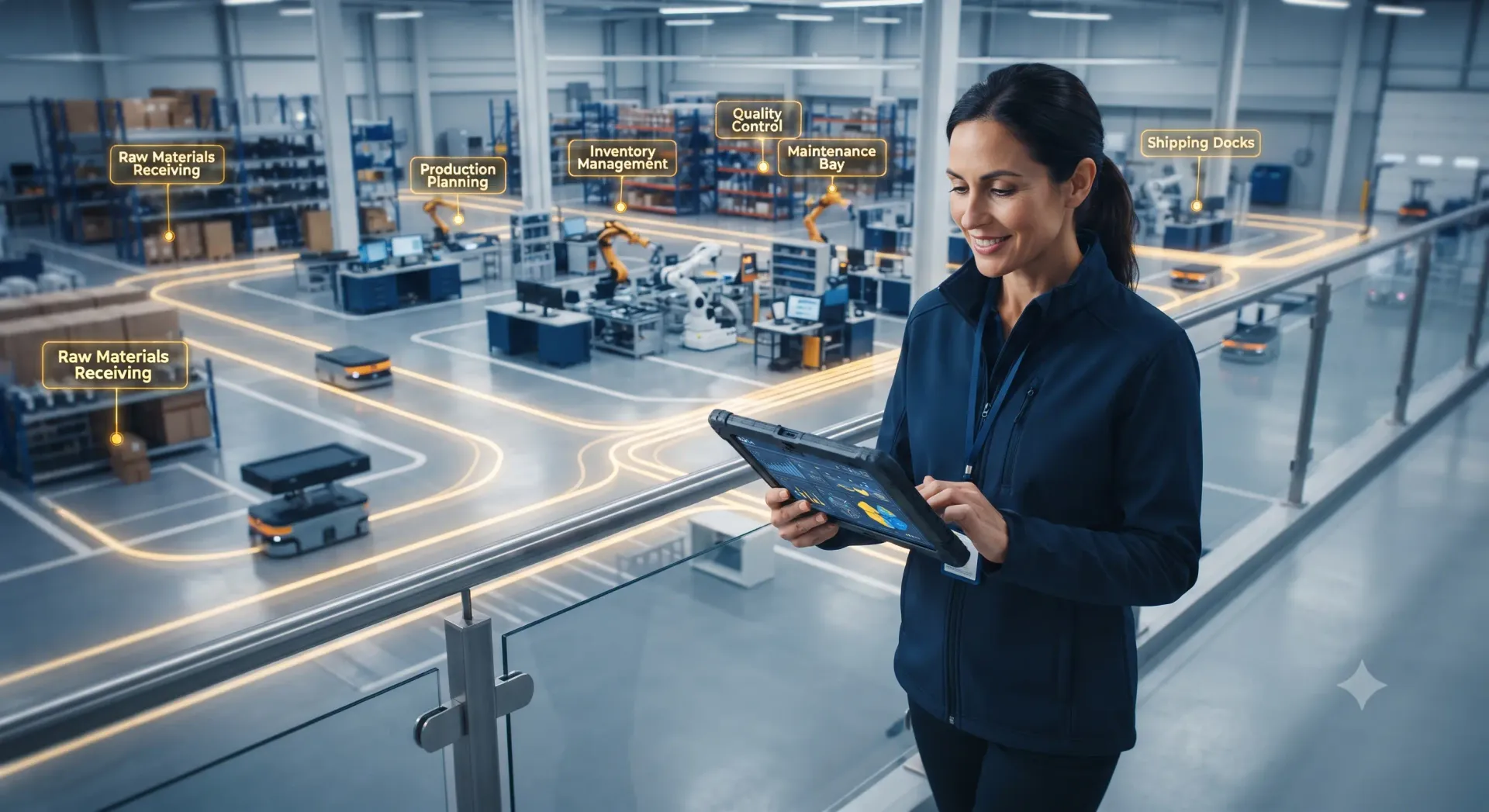
What Breaks Inside Manufacturing Operations as They Scale in 2026

By Yokendra Kumar P
DevOps Engineer
Quick Summary
Growth is something every manufacturer wants. But as production increases, the way the business operates usually has to change too. This guide looks at the operational problems that often show up as manufacturing businesses grow, and why better systems become important long before production reaches its limit.
When a manufacturing business is small, things tend to move pretty naturally.
People know each other.
If production changes, somebody walks across the floor and mentions it.
If inventory is running low, someone usually spots it before it becomes a bigger issue.
Nobody really thinks much about the process.
It just works.
Then the business grows.
A few more customers become a few hundred.
One production line becomes several.
More suppliers get involved.
More shifts.
More people.
That's usually when everyday work starts feeling different.
Not because anyone is doing a worse job.
There's simply a lot more happening than there used to be.
The systems that worked when the business was smaller start showing their limits.
That's often why manufacturers begin looking at better operational software. Growth isn't usually what causes the problem. It just makes existing problems much easier to notice.
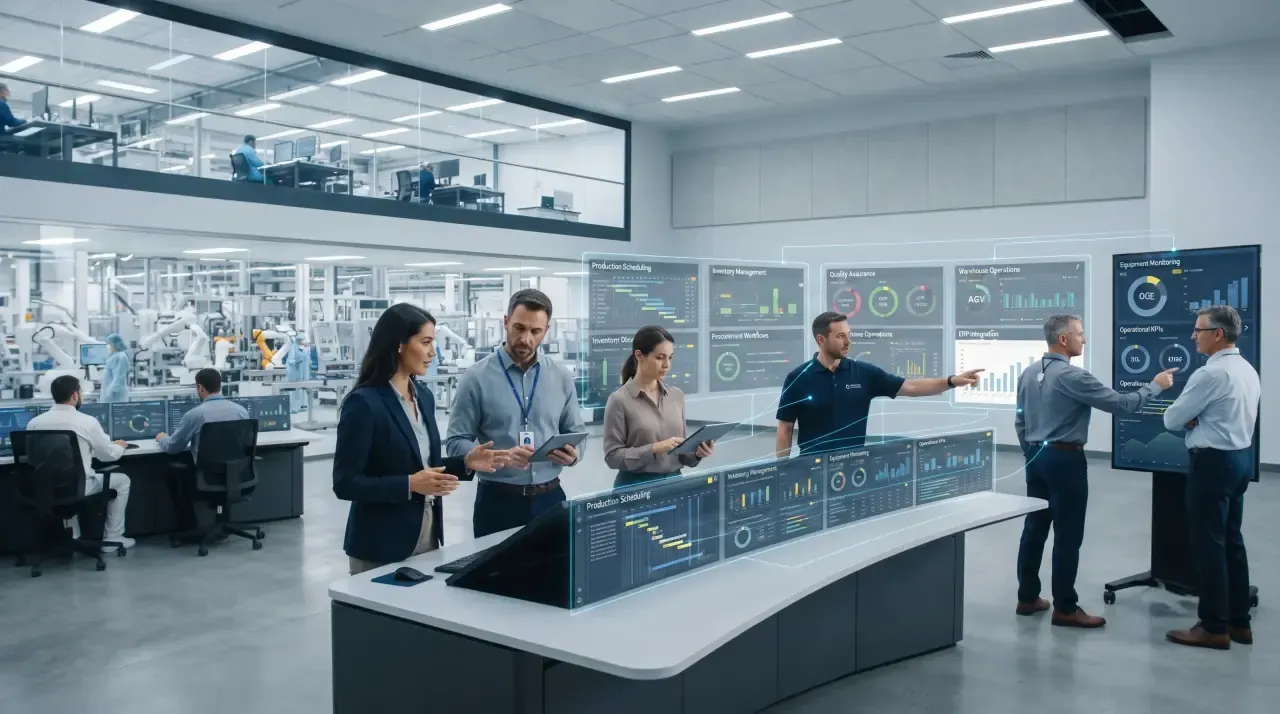
Growth Usually Changes More Than Production
Most businesses expect production to increase. What catches people off guard is everything else.
- More purchase orders.
- More supplier conversations.
- More inventory to keep track of.
- More quality checks.
- More planning meetings.
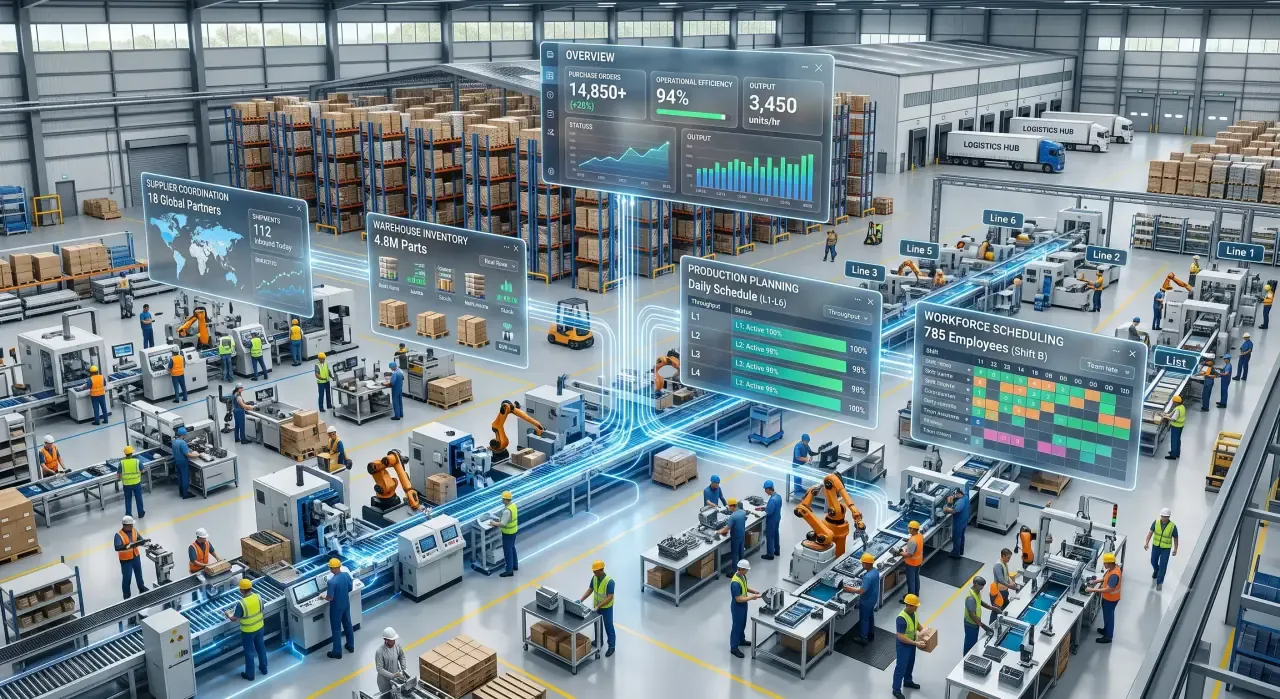
Every small task that used to take five minutes suddenly starts happening fifty times a day.
None of it feels dramatic on its own.
It just slowly becomes harder to keep everything moving.
Information Starts Slipping Between Teams
Manufacturing depends on people having the right information at the right time.
- Production needs updates from purchasing.
- Purchasing needs updates from inventory.
- Warehouse teams need to know what's leaving.
- Sales need realistic delivery dates.
If one update gets missed, someone else usually ends up chasing it later.
Not because people aren't communicating.
Because everyone is busy doing their own work.
As businesses grow, those little communication gaps happen more often unless information moves automatically.
Manual Processes Slowly Become the Bottleneck
Manual work rarely feels like a problem in the beginning.
One spreadsheet isn't difficult. One approval email doesn't take long. One report at the end of the day feels manageable.
Then production grows. The spreadsheets multiply. The reports become longer.
People start copying the same information into different systems.
Eventually someone spends half the morning updating software instead of helping production move forward.
That's usually when businesses start asking what can be automated.
Not everything.
Just the repetitive work that keeps coming back every day.
Businesses often introduce manufacturing workflow automation to keep those routine jobs moving without someone constantly checking every step.
Planning Gets Harder Than It Used To Be
Planning production sounds simple until everything starts changing at once.
- A supplier runs late.
- A machine needs maintenance.
- An urgent customer order comes in.
- Raw material availability changes.
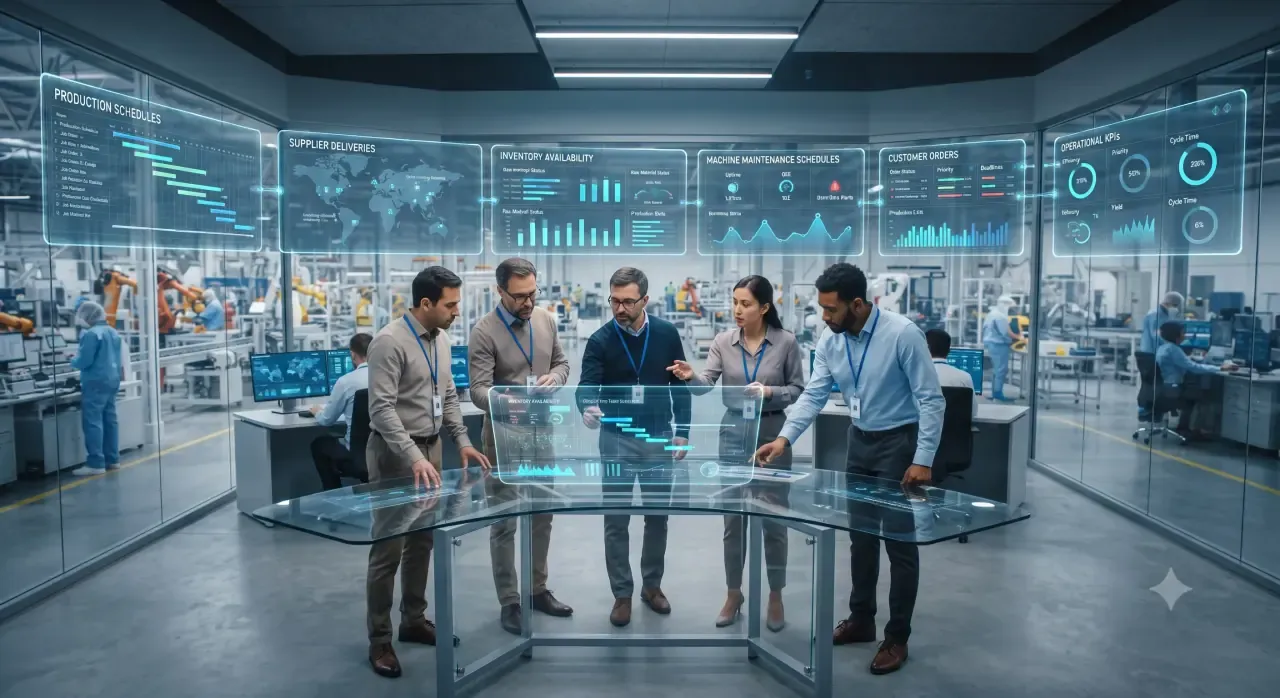
Now the whole schedule has to move around.
That isn't unusual.
The difficult part is making those decisions when the information lives in different places.
Sometimes the answer already exists.
It just takes too long to find it.
That's one reason more manufacturers are bringing production, inventory and operational data together instead of leaving it spread across different systems.
Connected Systems Help Businesses Keep Up
Most manufacturers already have software.
That's rarely the issue.
The issue is that every department often has its own system.
Each one does its own job.
But they don't always share information very well.
Someone ends up entering the same data twice.
Or calling another department to check something that should already be visible.
Connected systems reduce a lot of those moments.
Not every one of them.
Just enough that work keeps moving without people constantly stopping to ask questions.
How Trudosys Supports Manufacturing Operations
Every manufacturing business grows differently.
Some struggle with inventory visibility.
Some want better production planning.
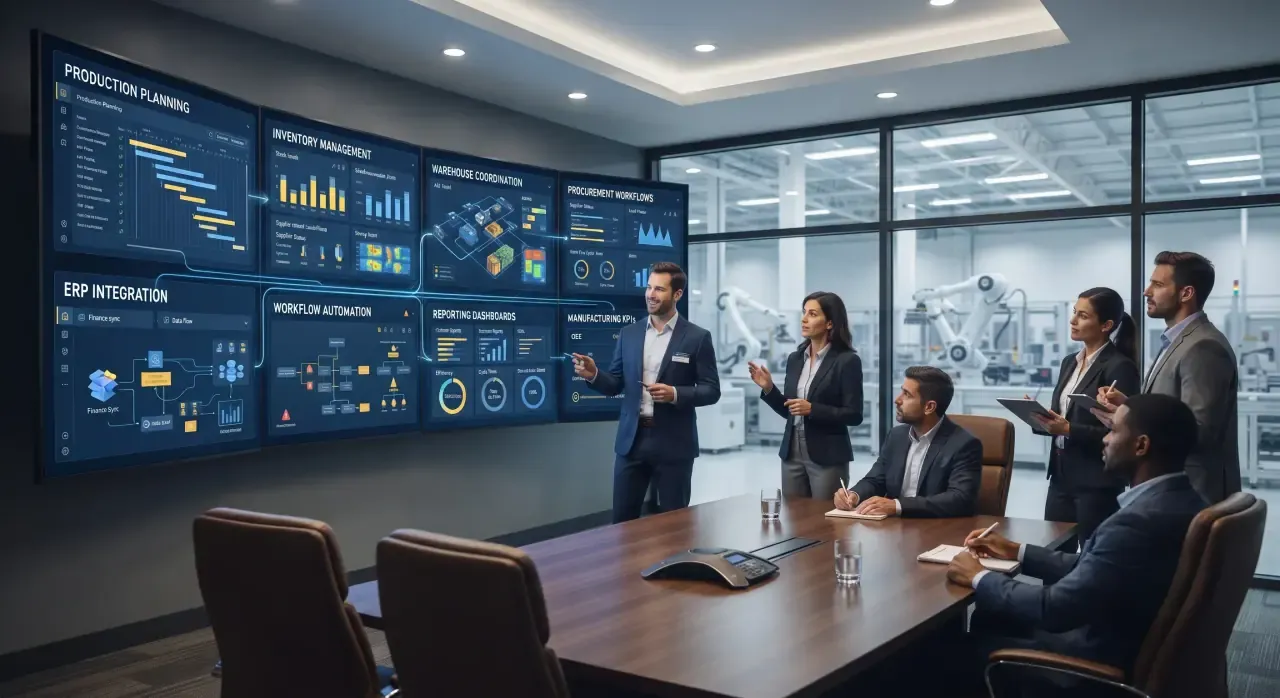
Others need warehouse systems, ERP software and reporting tools to work together properly.
That's where Trudosys starts.
The goal isn't to replace everything that's already there.
It's to understand how the business works today and build software around those day-to-day operations.
Frequently Asked Questions
Final Thoughts
Growth usually brings new customers and bigger opportunities.
It also brings more moving parts. More information. More people. More decisions.
The manufacturers that handle growth well aren't always the biggest.
They're usually the ones that make it easier for information to move, for teams to stay connected, and for everyday work to keep flowing even as the business gets busier.

Yokendra Kumar P
DevOps Engineer
Yokendra Kumar P is a DevOps Engineer with approximately two years of experience in cloud infrastructure, Kubernetes operations, and delivery automation. He works with AWS EKS and DigitalOcean DOKS, using tools such as Terraform, Helm, Jenkins, Argo CD, Docker, and Vault. His experience includes infrastructure automation, GitOps deployments, observability, and DevSecOps practices. He focuses on improving the reliability and efficiency of cloud-native applications through repeatable deployments and well-managed infrastructure.
Professional Experience: Approximately 2 years.
Industry and Project Experience: Cloud infrastructure, DevOps, platform engineering, Kubernetes operations, and DevSecOps.
Technical Expertise: AWS EKS, DigitalOcean DOKS, Kubernetes, Terraform, Helm, Jenkins, Argo CD, Docker, Vault, observability tools, CI/CD automation, and GitOps.