EHR & EMR Integration: Building Connected Healthcare Applications
Quick Summary
A healthcare app is only as useful as the information it can access. If patient records, appointments, prescriptions, and clinical updates are scattered across disconnected systems, both staff and patients feel the impact. This guide explains why EHR and EMR integration has become a key priority for healthcare apps in 2026 and what organisations should plan before starting.
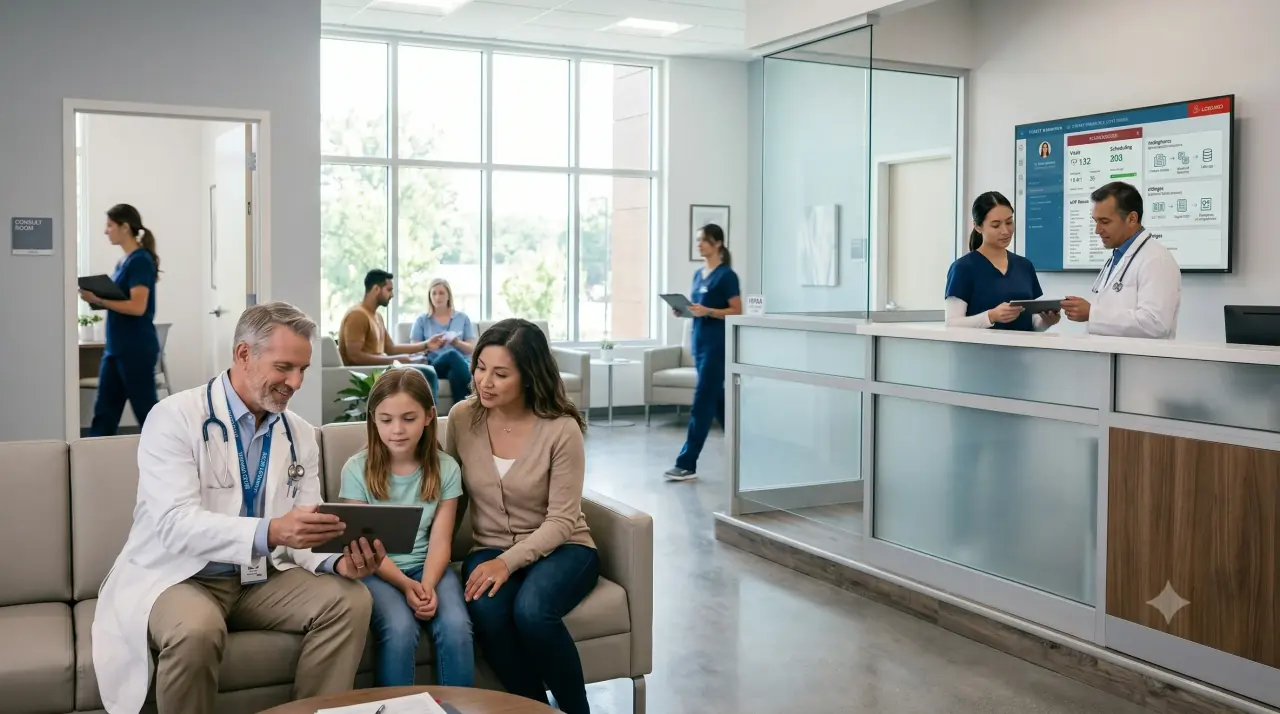
Imagine arriving for a medical appointment only to repeat information you've already shared twice before.
It happens more often than people realise.
The issue is rarely that healthcare teams are disorganised. More often, information is spread across different systems that do not communicate effectively with one another.
That is why EHR and EMR integration healthcare apps has become such an important topic.
Modern healthcare applications are expected to connect with existing records instead of creating another isolated source of information.
Many organisations exploring these projects are also investing in broader healthcare software modernisation.
Why EHR and EMR Integration Matters
Electronic Health Records (EHRs) and Electronic Medical Records (EMRs) store some of the most valuable information in healthcare.
Appointments, diagnoses, medications, histories, laboratory results, and treatment plans often depend on these systems.
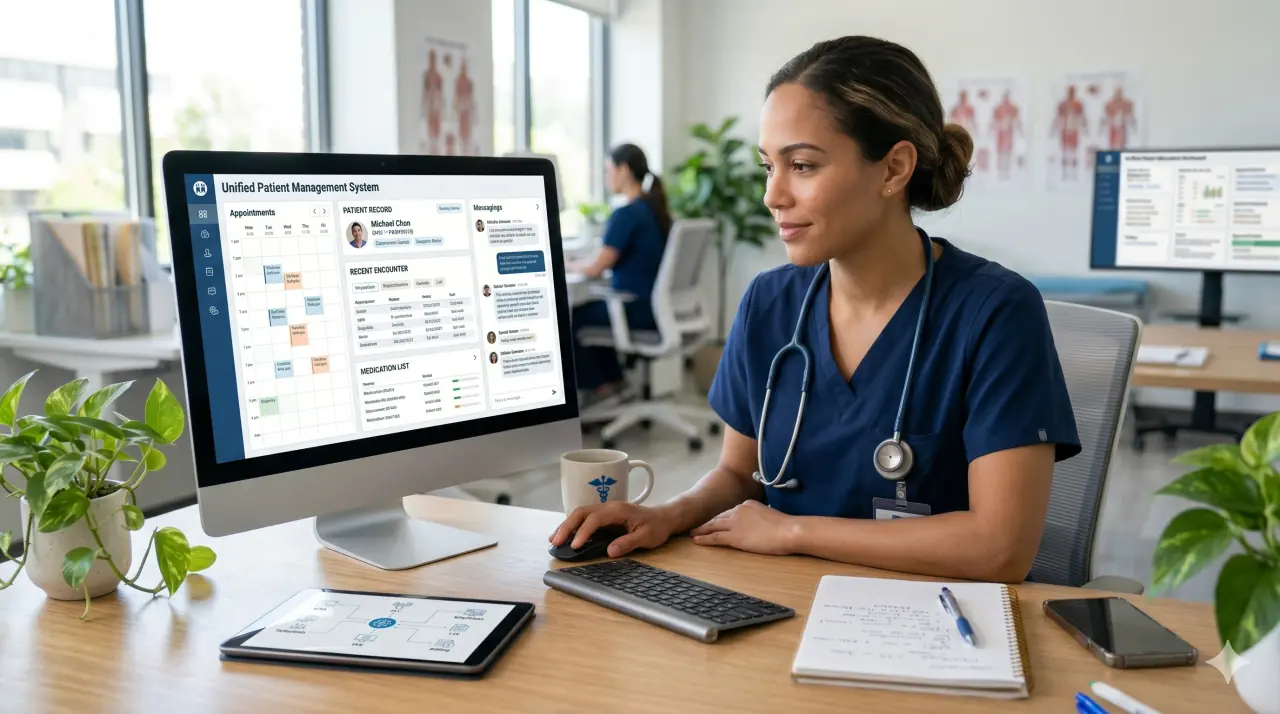
When a mobile app can safely access relevant information through proper integration, patients spend less time repeating details and staff spend less time switching between platforms.
The goal is not to duplicate records. It is to make existing information available where it is genuinely useful.
Well-designed EHR and EMR integration healthcare apps help organisations reduce unnecessary administration while improving continuity of care.
Patients Expect Connected Healthcare
People have become used to connected digital experiences.
Banking apps update instantly. Airline apps reflect gate changes in real time. Shopping platforms remember preferences automatically.
Healthcare is different, but expectations around convenience have still changed.
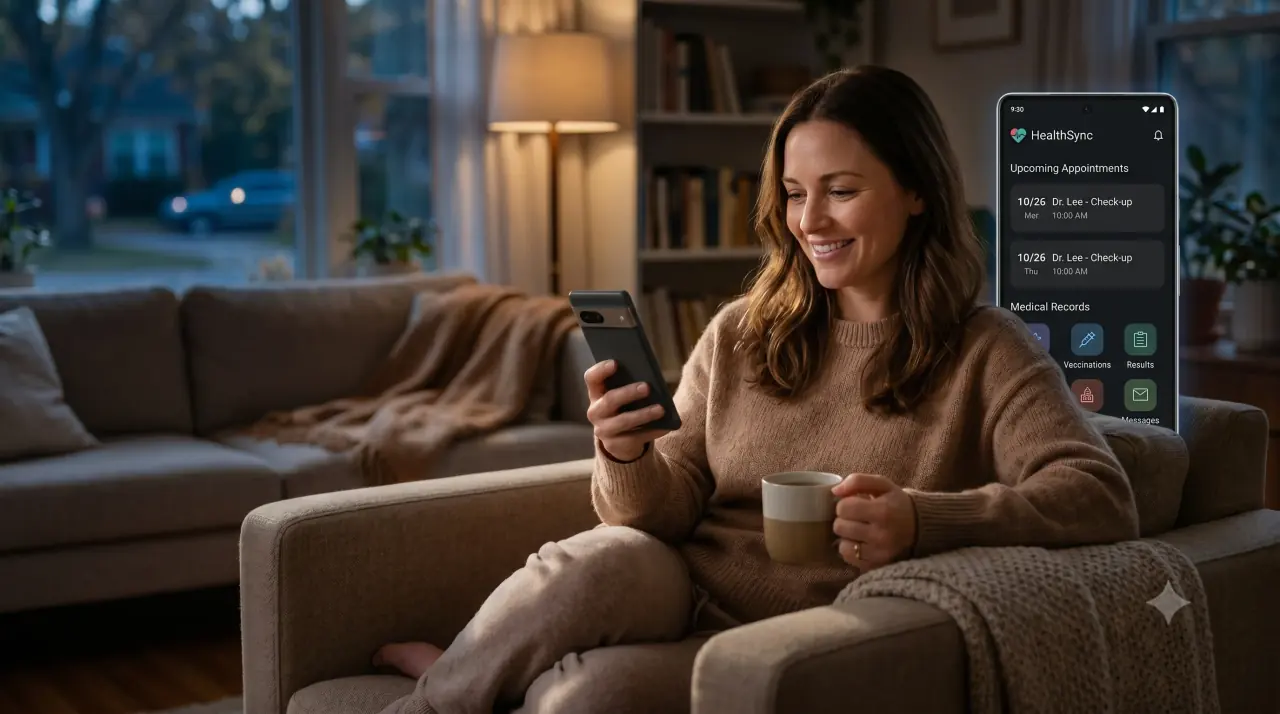
Patients increasingly expect appointment details, test updates, messages, and personal information to be available without multiple phone calls or repeated paperwork.
That is one reason many organisations pair healthcare apps with dedicated patient portals.
The smoother information flows, the easier the overall experience becomes.
Patient-facing teams can compare this with the patient portal app development guide.
Integration Helps Staff as Much as Patients
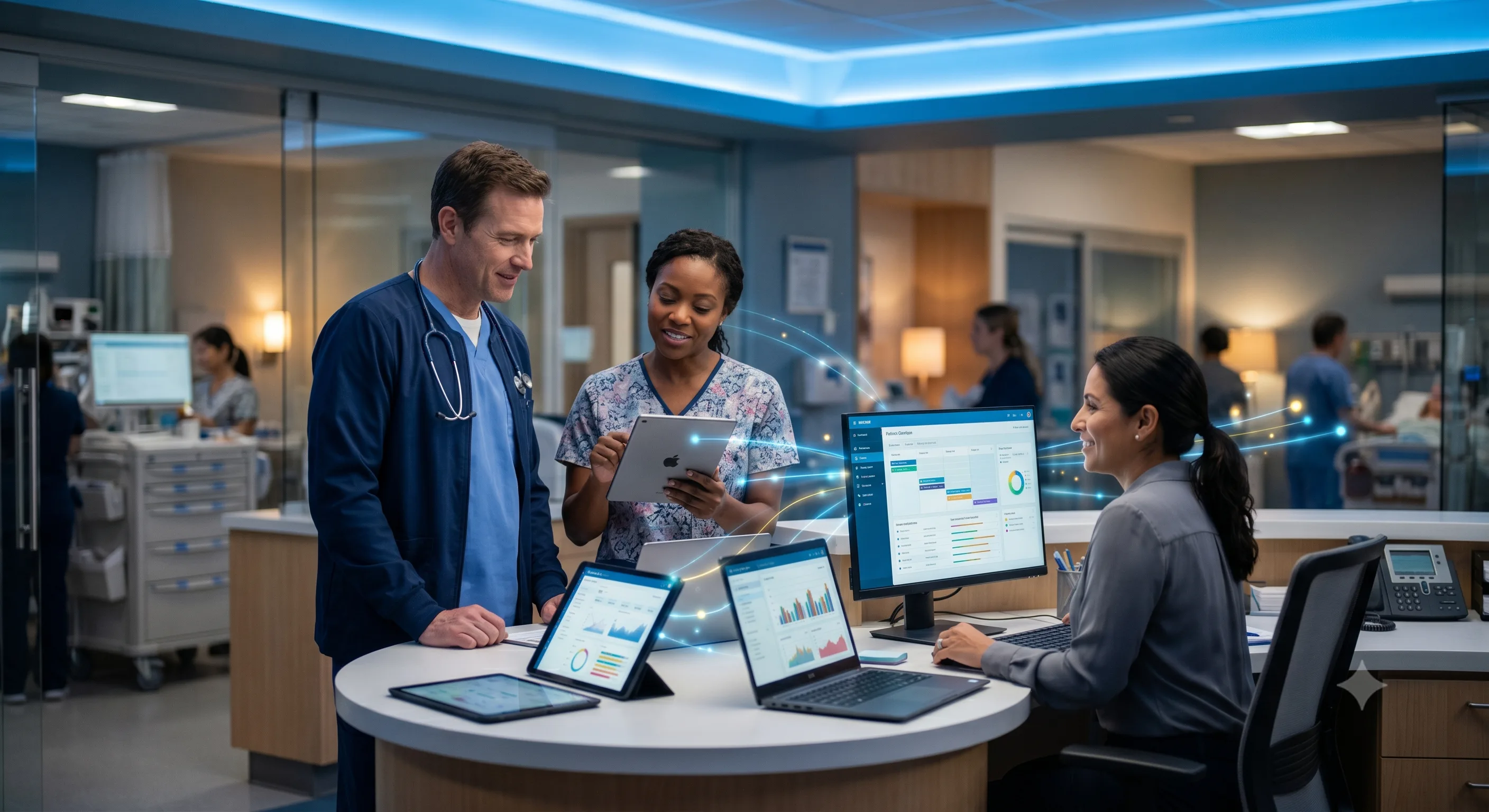
Much of the conversation focuses on patient experience, but integration also supports clinical and administrative teams.
Without connected systems, staff may need to check several platforms before finding the information they need.
Small delays add up.
Someone confirms an appointment in one system but forgets to update another. Test results arrive but are not visible in the app immediately. Notes exist, but only in a platform that another department cannot easily access.
Connected workflows reduce these situations.
They allow teams to spend less time searching for information and more time acting on it.
Planning Before Development Saves Time
Integration projects become easier when planning starts early.
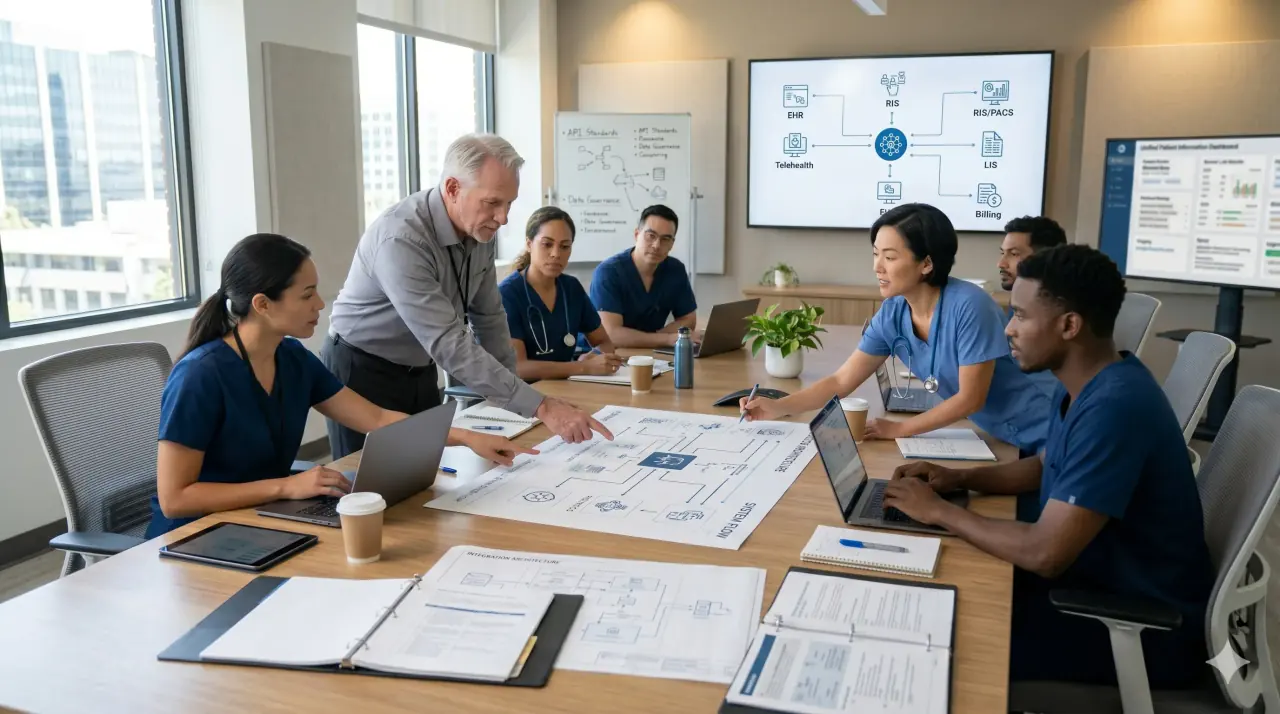
Before writing code, organisations should understand which systems need to exchange information, what data should move between them, and who should have access.
It is also useful to decide what happens when external systems are temporarily unavailable or records cannot be matched automatically.
Many successful healthcare software projects begin with these conversations instead of leaving them until later.
The NHS continues to encourage digital transformation that improves interoperability and connected care across healthcare services.
Security and Compliance Cannot Be Overlooked
Healthcare information deserves careful protection.
Access permissions, secure authentication, encryption, and activity logging should be considered from the earliest planning stages rather than being added later.
Privacy is not simply a legal requirement. It is part of maintaining patient trust.
Organisations should also remain familiar with UK guidance on handling personal information and healthcare data responsibly.
For a practical privacy checklist, read the guide to GDPR compliant healthcare app development.
Start With Practical Integrations
It can be tempting to connect every available system at once.
In reality, many organisations achieve better results by starting with the integrations that solve the biggest day-to-day problems.
Appointment scheduling. Patient profiles. Secure messaging. Basic record visibility.
Once those foundations are stable, additional capabilities can be introduced over time.
This phased approach often creates fewer disruptions and makes it easier to gather feedback from real users.
Healthcare providers following this route frequently combine mobile initiatives with wider software improvements across the organisation.
Where Trudosys Fits In
No two healthcare environments use exactly the same technology stack.
Some organisations rely on established EHR platforms. Others operate specialist systems built around their own clinical workflows.
Trudosys develops healthcare applications with integration in mind, helping organisations connect mobile experiences, patient communication, reporting, and operational systems without forcing teams to abandon the tools they already depend on.
Explore healthcare-focused development services for integration-led healthcare software planning.
Organisations estimating scope can also review healthcare app development cost drivers.
Frequently Asked Questions
What is EHR and EMR integration in healthcare apps?
EHR and EMR integration connects healthcare apps with existing electronic health or medical record systems so relevant patient, appointment, medication, test, and clinical information can be accessed safely in the right workflow.
Why is EHR and EMR integration important in 2026?
It is important because patients and staff increasingly expect connected digital experiences. Integration reduces repeated data entry, supports continuity of care, and prevents healthcare apps from becoming another isolated system.
What is the difference between an EHR and an EMR?
An EMR usually refers to a medical record within one provider or organisation, while an EHR is often broader and designed to support record sharing across healthcare settings. Exact usage varies by system and provider.
Can healthcare mobile apps integrate with existing EHR systems?
Yes, when the EHR provides suitable APIs, authentication, permissions, documentation, and governance processes. Integration feasibility should be confirmed before finalising scope or timelines.
What are the benefits of healthcare app integration?
Benefits include fewer repetitive admin tasks, better information visibility, smoother patient experiences, reduced manual copying, clearer workflows, and improved access to relevant clinical information.
How does healthcare interoperability improve patient care?
Interoperability helps the right information move between systems, teams, and workflows. This can reduce repetition, support better decisions, and make care experiences feel more coordinated.
What security measures are important for EHR and EMR integration?
Important measures include secure authentication, role-based access, encryption, least-privilege permissions, activity logging, careful data handling, and clear processes for errors or unavailable systems.
Should every healthcare system be connected at once?
Usually no. Most teams get better results by starting with the integrations that solve the biggest operational problem, then expanding once the core workflows are stable.
What challenges do organisations face during healthcare software integration?
Common challenges include API limitations, unclear data ownership, mismatched records, permission complexity, unavailable systems, legacy platforms, testing gaps, and operational change management.
How can Trudosys support EHR and EMR integration projects?
Trudosys helps healthcare teams plan and build integrations around workflow value, technical feasibility, security, data protection, testing, support, and the systems teams already use.
Final Thoughts
A healthcare app should not become another place where information gets trapped.
Its value comes from helping the right people access the right information at the right time.
That is why EHR and EMR integration healthcare apps continue to be a major focus in 2026.
Connected systems reduce repetition, support better workflows, and create a smoother experience for both patients and staff.
Many of the same ideas also appear in broader healthcare technology projects, where better-connected systems quietly remove friction from everyday operations.