
How UK Healthcare Providers Can Improve Operations in 2026

By Prajwal Jorapur
QA Engineer
Quick Summary
Healthcare providers deal with far more than patient care. Appointments, staff coordination, reporting, and communication all have to work together. This guide looks at the operational challenges UK healthcare providers are facing in 2026 and how custom software can help simplify everyday work.
When people think about healthcare, they usually picture consultations, treatments, and clinical care.
What they don't see is everything happening around those moments.
Appointments have to be managed. Staff schedules need constant updates. Departments share information throughout the day. Patient records move between different systems. Reports need to be ready when managers need them.
None of these activities are patient care on their own, but they influence how smoothly healthcare organisations operate every single day.
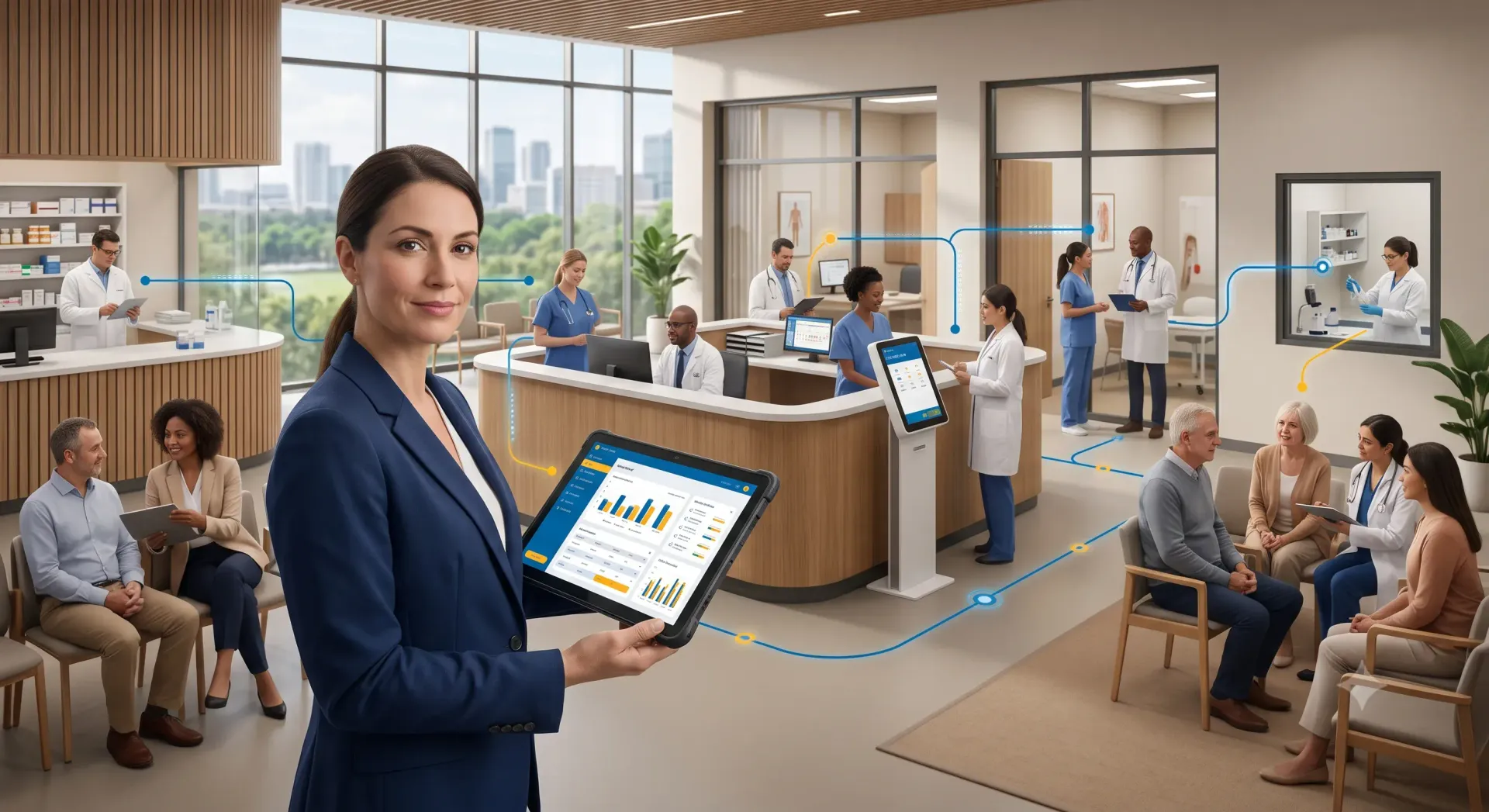
As services expand and patient expectations continue to grow, many UK healthcare providers are finding that older ways of working no longer keep pace. NHS England continues to place a strong emphasis on digital transformation, connected services, and reducing administrative pressure across healthcare organisations.
Many providers are now looking beyond standalone software and focusing instead on improving the way work moves across the organisation.
Healthcare Is Becoming More Complex to Manage
Healthcare has changed significantly over the last few years.
Patients expect quicker communication.
Services involve more coordination.
Compliance requirements continue to evolve.
Staff are expected to do more without adding unnecessary administrative work to already busy days.
Many organisations have introduced new software over time, but each new system often solves only one problem.
Eventually, teams find themselves switching between multiple applications just to complete routine tasks.
The challenge is rarely a lack of technology.
It's that the technology doesn't always work together.
Healthcare organisations across the UK are increasingly prioritising connected digital services that improve operational efficiency as well as patient experience.
Better Patient Care Starts Behind the Scenes
Patients notice when appointments run on time.
They notice clear communication.
They notice when information is available without having to repeat the same details.
Behind those experiences are operational processes that most people never see.
Staff spend time confirming appointments.
Reception teams answer routine questions.
Managers review reports.
Departments exchange information throughout the day.
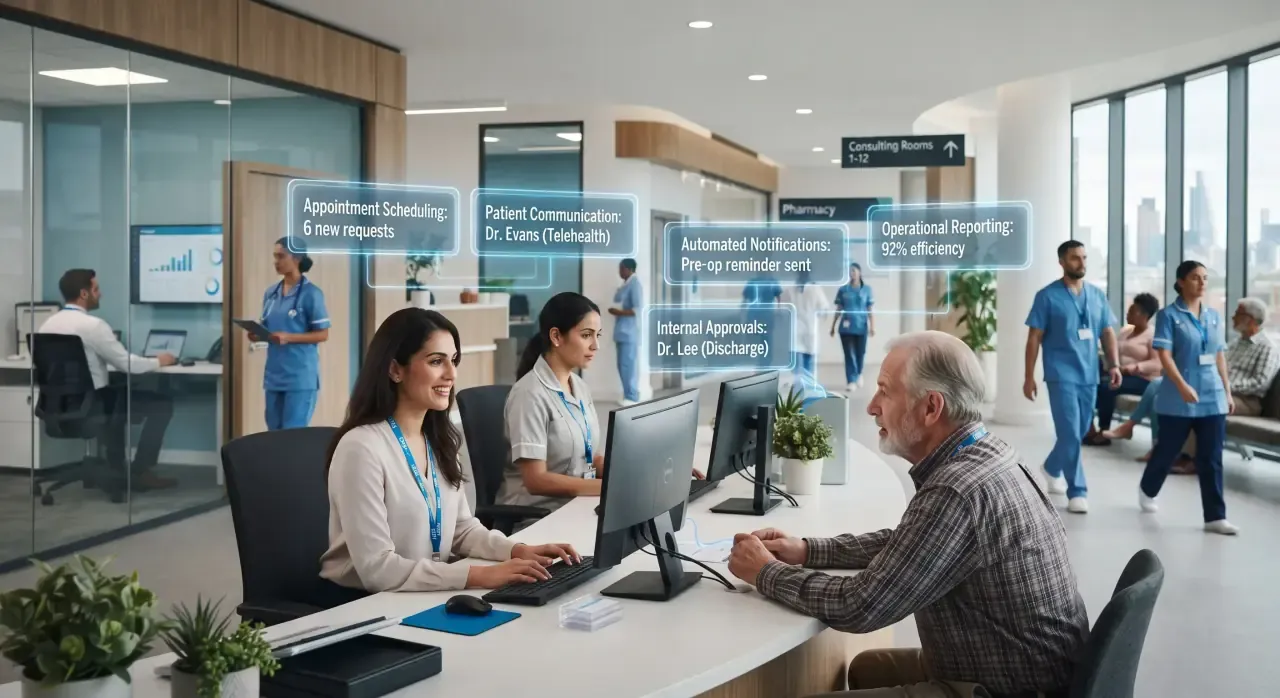
When those activities rely on manual work, small delays become part of everyday operations.
Custom healthcare software helps reduce many of those interruptions by connecting workflows rather than adding another layer of administration.
Appointment scheduling, patient communication, internal approvals, notifications, and reporting can all work together instead of operating separately.
Many healthcare organisations are also adopting business process automation to remove repetitive administrative tasks that take time away from patient services.
Connected Systems Reduce Everyday Delays
Healthcare depends on coordination.
Reception relies on scheduling.
Clinical teams rely on patient information.
Management relies on accurate reporting.
Finance relies on completed documentation.
When these systems don't communicate properly, employees spend valuable time chasing updates instead of acting on them.
Connected software changes that.
Information updates automatically.
Departments work from the same data.
Routine tasks happen without someone having to remember every step.
Instead of asking where something is, teams can focus on what needs to happen next.
Interoperability continues to be one of the biggest priorities for healthcare providers investing in digital services across the UK.
Many organisations begin this journey with patient-facing platforms before expanding into wider operational improvements.
Better Visibility Supports Better Decisions
Healthcare leaders make decisions throughout the day.
Do appointment schedules need adjusting?
Where are delays happening?
Are staff resources being used effectively?
Which services need additional support?
Those decisions become easier when everyone is working from reliable information.
Good visibility is not about creating more reports.
It's about making sure the information already exists when people need it.
When reporting updates automatically and departments stay connected, problems become visible much earlier, giving teams more time to respond before small issues become larger ones.
Why More UK Healthcare Providers Are Choosing Custom Software
Every healthcare organisation works differently.
A private clinic has different priorities from a hospital.
A specialist practice manages different workflows from a diagnostic centre.
Trying to make every provider work in exactly the same way often leads to unnecessary workarounds.
Custom software takes a more practical approach.

Instead of asking organisations to adapt to the software, the software is designed around the way the organisation already operates.
That usually makes adoption easier while giving providers the flexibility to improve operations as their services continue to grow.
Where Trudosys Fits In
Healthcare organisations don't all have the same priorities.
Some want to improve patient communication.
Others need better scheduling, reporting, workflow automation, or system integrations.
Trudosys starts by understanding how those day-to-day operations currently work before designing software around them. The aim is to simplify everyday operations without disrupting the way healthcare teams deliver care.
Explore healthcare software solutions. For organisations planning broader custom software projects, review custom software development services.
Frequently Asked Questions
Final Thoughts
Running a healthcare organisation has never been simple.
Today's challenge is keeping operations organised while demand continues to grow.
The providers making the biggest improvements aren't necessarily introducing more technology.
They're making better use of it.
When systems work together, routine administration becomes easier to manage, communication improves, and staff have more time to focus on patients instead of processes.
That's why more UK healthcare providers are investing in custom software as part of their long-term operational strategy.

Prajwal Jorapur
QA Engineer
Prajwal Jorapur is a QA Engineer with more than three years of experience testing web, mobile, and API-based applications. His domain experience includes healthcare, CRM, sales, and property and community management. He works across functional, automated, API, exploratory, and performance testing to identify defects and assess application behavior. His approach focuses on software reliability and usability, helping development teams validate business workflows and deliver applications that support everyday user needs.
Professional Experience: More than 3 years.
Industry and Project Experience: Software and IT, healthcare, CRM and sales platforms, and property and community management applications.
Technical Expertise: Functional testing, test automation, API testing, exploratory testing, performance testing, and web and mobile application quality assurance.