

Real-Time Supply Chain Software in 2026: How It Helps Companies Stay Competitive

By Santosh Ranbhare
Software Developer
Quick Summary
Most supply chain problems don't happen because people aren't working hard enough. They happen because information arrives too late. This guide looks at how real-time supply chain software helps businesses see what's happening as it happens, making everyday decisions a little easier and reducing the number of surprises along the way.
A few years ago, checking reports once or twice a day was enough for a lot of businesses.
Not anymore.
Orders change. Inventory moves. Suppliers miss deadlines. Customers want answers quickly, not after someone has updated a spreadsheet.
By the time yesterday's report lands in your inbox, something has usually changed.
That's one reason more businesses are looking at real-time supply chain software.
It isn't really about having another dashboard.
It's about seeing a problem while you still have a chance to do something about it.
Why Waiting for Yesterday's Data No Longer Works
Most supply chain issues start off small.
A shipment leaves late.
Stock doesn't update properly.
A supplier misses a collection slot.
Nothing unusual there.
The trouble starts when nobody notices until much later.
One delay leads to another. Plans get changed. Customer expectations have already been set.
By then, people aren't solving the original issue anymore. They're dealing with everything that happened because of it.
More businesses are investing in real-time visibility for exactly this reason. The sooner teams know something has changed, the more options they usually have.
Real-Time Information Changes How Teams Work
People often think faster data means faster computers.
Usually, it means fewer phone calls.
Warehouse staff already know what's arriving.
Operations teams don't have to keep asking for updates.
Customer support isn't trying to piece together information from three different systems before replying to someone.
It just cuts out a lot of unnecessary back and forth.
People spend less time looking for information and more time actually using it.
That sounds like a small change.
It rarely feels small during a busy day.
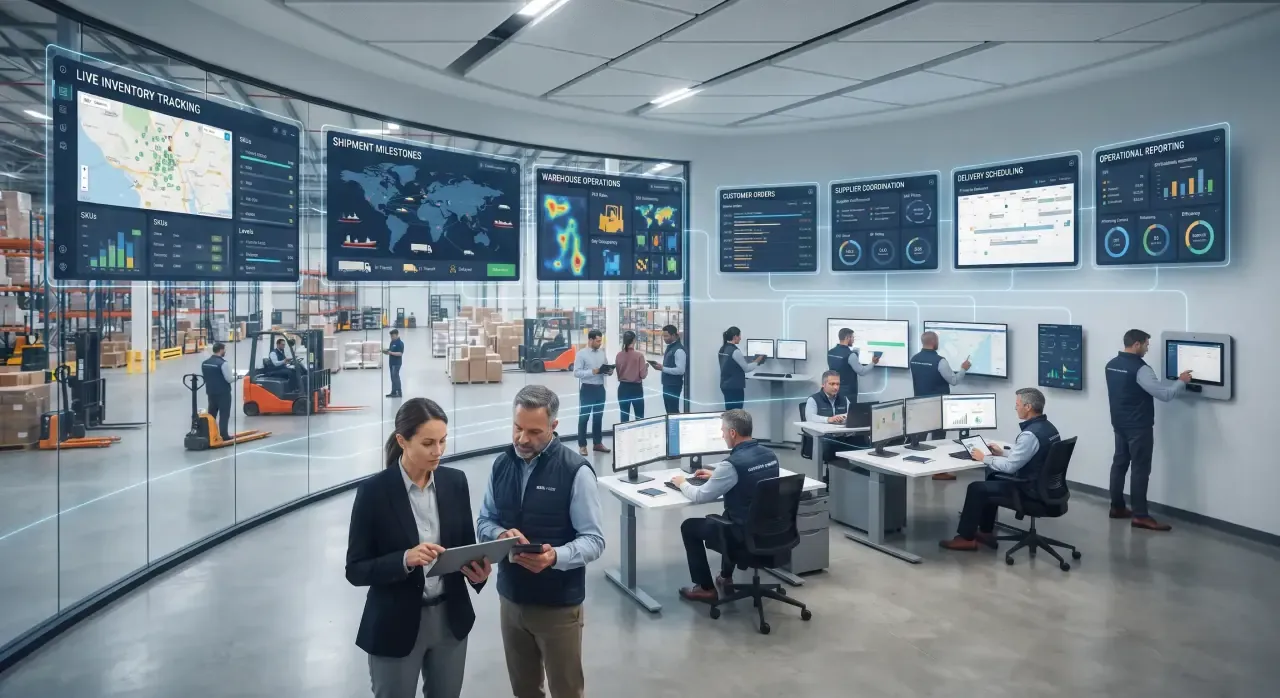
Better Visibility Means Faster Decisions
Every supply chain produces data.
Orders.
Inventory.
Returns.
Supplier updates.
Delivery status.
The challenge isn't collecting any of it.
It's making sure everyone is looking at the same information.
If dispatch sees one thing and customer support sees something else, somebody ends up checking emails or making another phone call.
Connected systems remove a lot of those moments.
Not every one of them.
Just enough that work keeps moving instead of stopping every few minutes.
Where Real-Time Supply Chain Software Makes the Biggest Difference

The benefits usually show up in ordinary places first.
Inventory numbers stay more accurate.
Shipment updates arrive sooner.
Warehouses spend less time checking where things are.
Managers don't have to ask for the same report three different times.
Customers get better answers because employees already have the information.
None of those changes sounds huge on its own.
Put them together and the day becomes noticeably easier to manage.
Why Businesses Are Moving Towards Connected Supply Chains
Most businesses already have software.
That's rarely the problem.
They've got an ERP system, warehouse software, transport platforms, accounting tools, supplier portals.
The problem is that those systems often feel like separate businesses.
Someone updates one.
Someone else copies the information somewhere else.
Then another team updates it again.
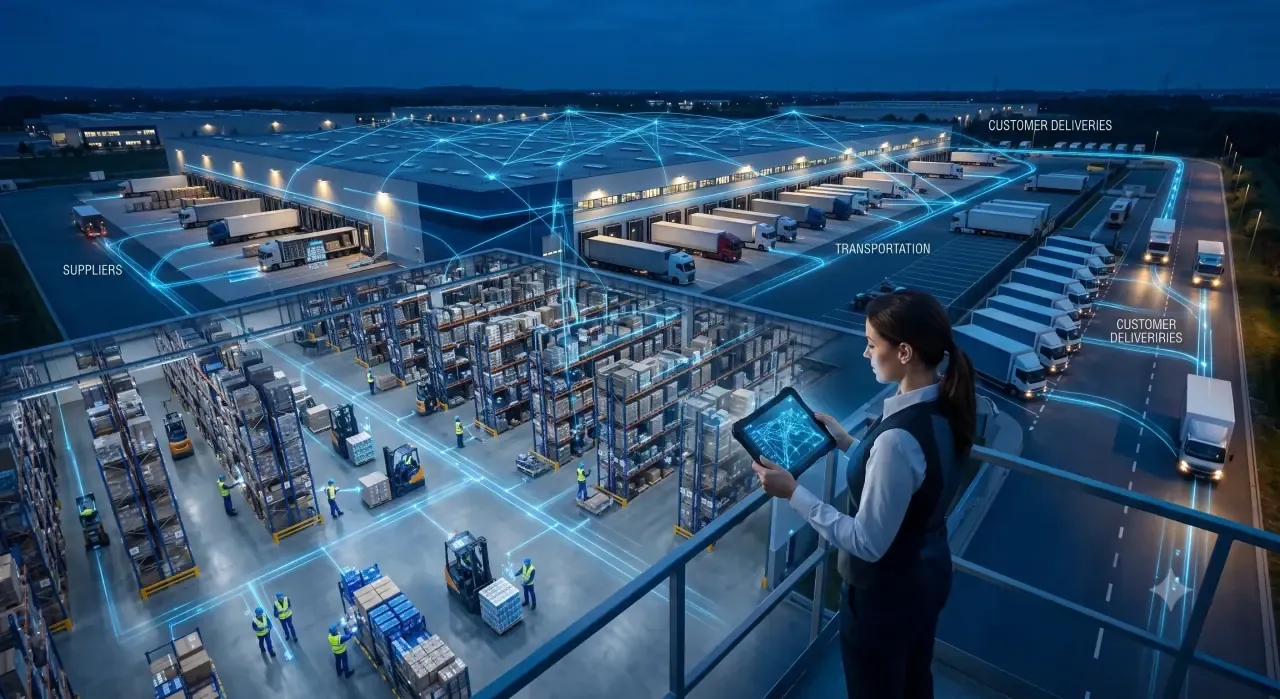
Real-time supply chain software helps bring those pieces together, so information moves with the work instead of stopping inside one application.
Many companies combine this with business process automation because it removes even more of the repetitive work people deal with every day.
For a practical starting point, use the shipment exception workflow to assign milestone ownership and test missing, duplicate, or offline updates.
How Trudosys Supports Supply Chain Operations
Every supply chain has its own way of working.
Some businesses struggle with inventory visibility.
Others need better warehouse coordination.
Some want reporting that's easier to understand.
Others simply want systems that actually talk to each other.
That's where Trudosys starts.
Instead of trying to force businesses into standard software, the focus is on understanding how the operation already works and building around it.
For broader custom software development, check our services.
Frequently Asked Questions
Final Thoughts
Supply chains will always have delays.
There will always be unexpected orders, supplier issues, and things that don't go according to plan.
Good software doesn't stop those things from happening.
What it can do is help people spot problems earlier, respond a little quicker, and avoid spending half the day trying to figure out what happened.
Sometimes that's the difference between a small disruption and a much bigger one.

Santosh Ranbhare
Software Developer
Santosh Ranbhare is a Software Developer with more than two years of experience building Java backend services and enterprise applications. He works with Spring Boot, Spring Data JPA, Hibernate, REST APIs, and microservices, supported by experience with relational databases, caching, search, and messaging tools. His technical background includes PostgreSQL, MySQL, Redis, Elasticsearch, and RabbitMQ. He also has foundational knowledge of AWS, Docker, Jenkins, CI/CD, and system design, complementing his focus on backend application development.
Professional Experience: More than 2 years.
Industry and Project Experience: Software development, Java backend engineering, and enterprise applications.
Technical Expertise: Java, Spring Boot, Spring Data JPA, Hibernate, REST APIs, microservices, PostgreSQL, MySQL, Redis, Elasticsearch, and RabbitMQ. Foundational knowledge of AWS, Docker, Jenkins, CI/CD, and system design.