

What UK Businesses Must Fix Before 2026 to Stay Competitive

By Yokendra Kumar P
DevOps Engineer
Quick Summary
Many UK businesses are growing, but growth also exposes weaknesses in everyday operations. This guide looks at the common issues businesses should address before 2027, from disconnected systems and manual processes to poor visibility and slow decision-making, and explains how stronger operational foundations support long-term growth.
A business can appear successful from the outside while struggling behind the scenes.
Sales are coming in.
Customers are being served.
Employees stay busy throughout the day.
Yet managers still spend hours chasing updates, waiting for approvals, and trying to understand what is happening across different departments.
Those problems rarely appear overnight.
They build gradually as the business grows.
A process that worked well with ten employees often becomes difficult to manage with fifty. Information starts living in different systems. Teams create spreadsheets to fill gaps. People rely on emails and messages because software no longer reflects how work actually happens.
That is why many organisations are taking a closer look at their operational foundations before planning the next stage of growth. Recent UK government updates continue to encourage SMEs to improve digital capability as part of long-term productivity and competitiveness.
Businesses reviewing these challenges often begin by assessing their wider operational software and internal workflows.
Growth Exposes Problems That Were Easy to Ignore
Most operational problems begin as small inconveniences.
One department keeps its own spreadsheet.
Another team tracks work using email.
Someone manually updates customer information because two systems do not communicate with each other.
At first, none of this feels like a serious issue.
As the business grows, those small workarounds become everyday processes.
Eventually employees spend more time managing information than acting on it.
The problem is not the people.
It is that the business has outgrown the systems supporting it.
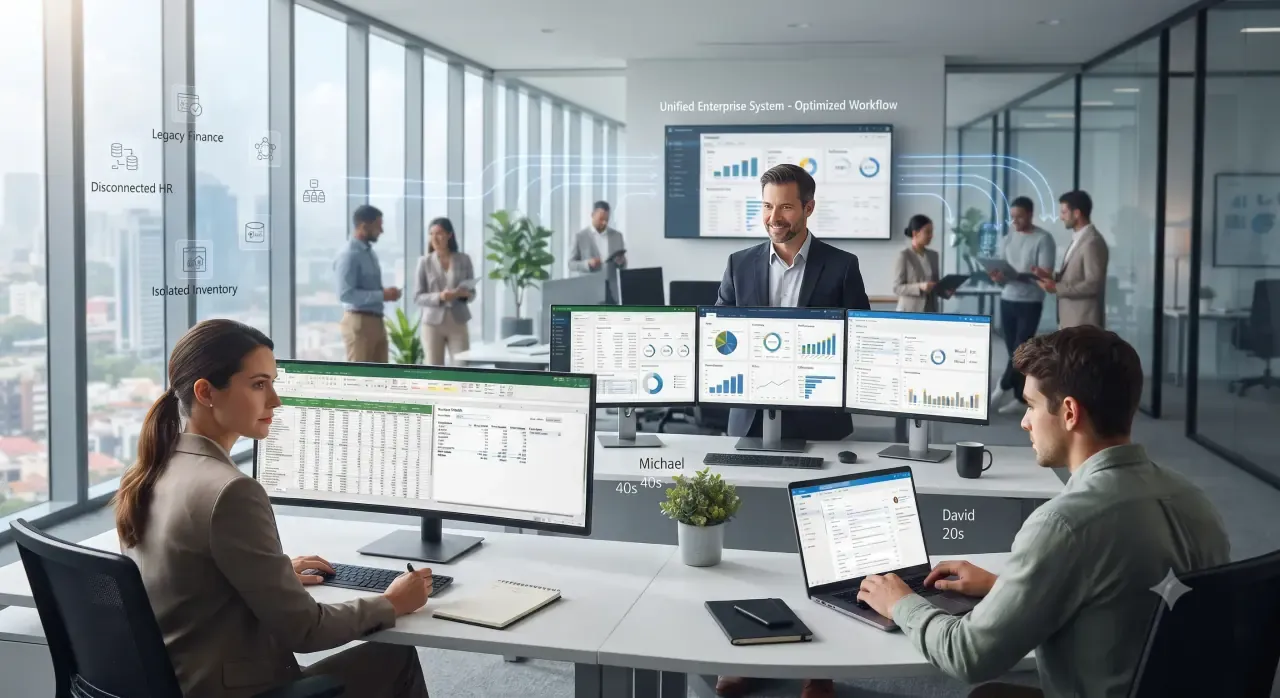
Disconnected Systems Slow Businesses Down
Many businesses use excellent software.
The challenge is that each application often works independently.
Customer information lives in one platform.
Finance uses another.
Operations rely on something different.
Management reporting comes from somewhere else entirely.
When information has to be copied between systems, delays become part of the working day.
Teams start asking questions that software should already answer.
- Has this been approved?
- Has the customer paid?
- Has production started?
- Has the delivery been scheduled?
Connected software reduces these unnecessary conversations by allowing information to move automatically instead of depending on manual updates.
Too Much Time Is Still Spent on Manual Work
Many businesses underestimate how much time disappears into repetitive administration.
- Approvals.
- Status updates.
- Document handling.
- Internal notifications.
- Data entry.

Each task may only take a few minutes.
Across hundreds of activities every week, those minutes become hours.
Recent research also shows UK businesses are increasing their use of AI and digital tools, not simply to reduce costs but to improve productivity and day-to-day operations.
Many organisations begin addressing this challenge through business process automation, allowing software to handle routine activities while employees focus on work that requires judgement.
Better Visibility Leads to Better Decisions
Leaders make decisions every day.
- Should another employee be hired?
- Can production handle another large order?
- Is customer demand increasing or slowing down?
- Which department needs attention first?
Those decisions become difficult when every team reports information differently.
Reliable visibility is not about creating more dashboards.
It is about making sure everyone works from the same information.
When reporting updates automatically, discussions become shorter because people spend less time debating numbers and more time deciding what to do next.
Businesses Need Systems That Can Grow With Them
Growth creates opportunity.
It also creates complexity.
- More customers.
- More employees.
- More suppliers.
- More approvals.
- More reporting.
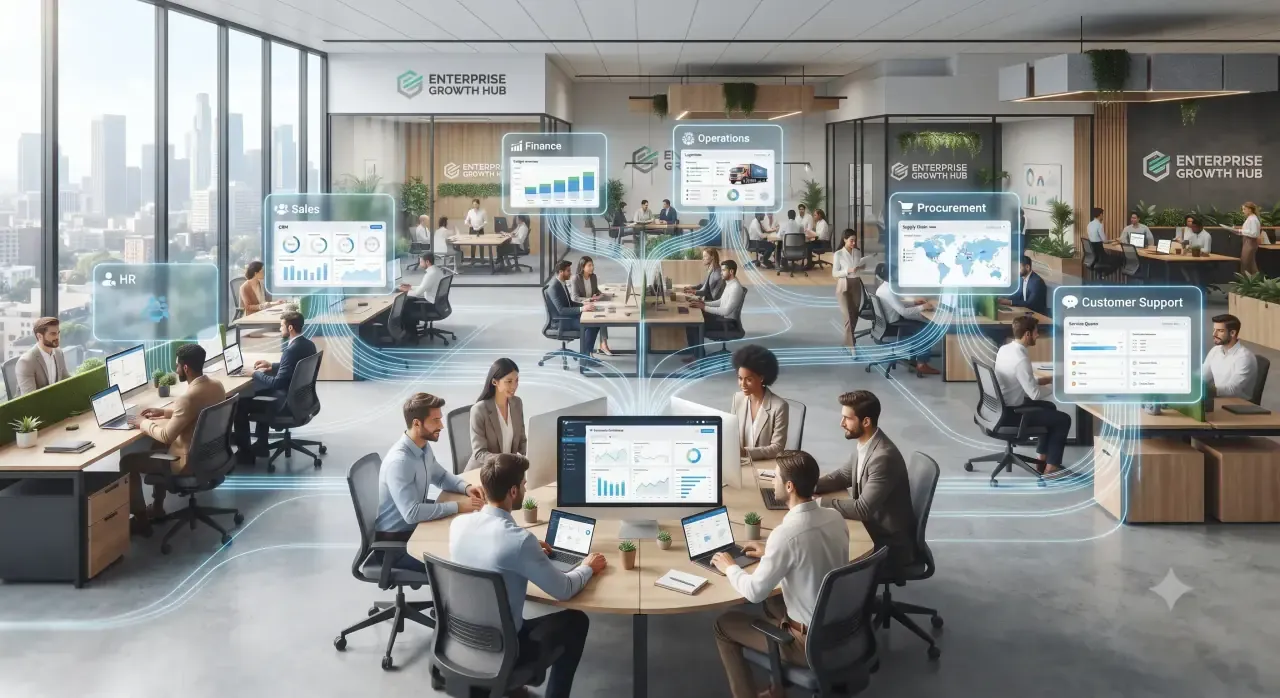
Businesses that continue relying on manual coordination eventually reach a point where growth itself becomes difficult to manage.
That is why many UK organisations are investing in custom operational software rather than adding more disconnected tools.
The goal is not to change how people work overnight.
It is to build systems that continue supporting the business as it becomes larger and more complex.
Business groups and industry bodies continue to highlight digital adoption as one of the biggest opportunities for improving SME productivity across the UK.
Where Trudosys Fits In
Every business has its own way of working.
- Approval processes differ.
- Reporting requirements differ.
- Customer journeys differ.
Because of that, software should reflect existing operations instead of forcing businesses into standard templates.
Trudosys works with organisations to understand how work currently flows between teams before designing software around those processes. Whether the requirement involves workflow automation, reporting, operational visibility, or department-wide software, the focus remains on making everyday work simpler to manage.
Businesses looking to modernise operations can explore custom software development services. For a practical next step, compare this guide with how businesses can improve operational efficiency.
Frequently Asked Questions
Final Thoughts
Most businesses do not need to work harder. Rather they need:
- They need fewer interruptions.
- Less duplicate work.
- Better visibility.
- Faster communication.
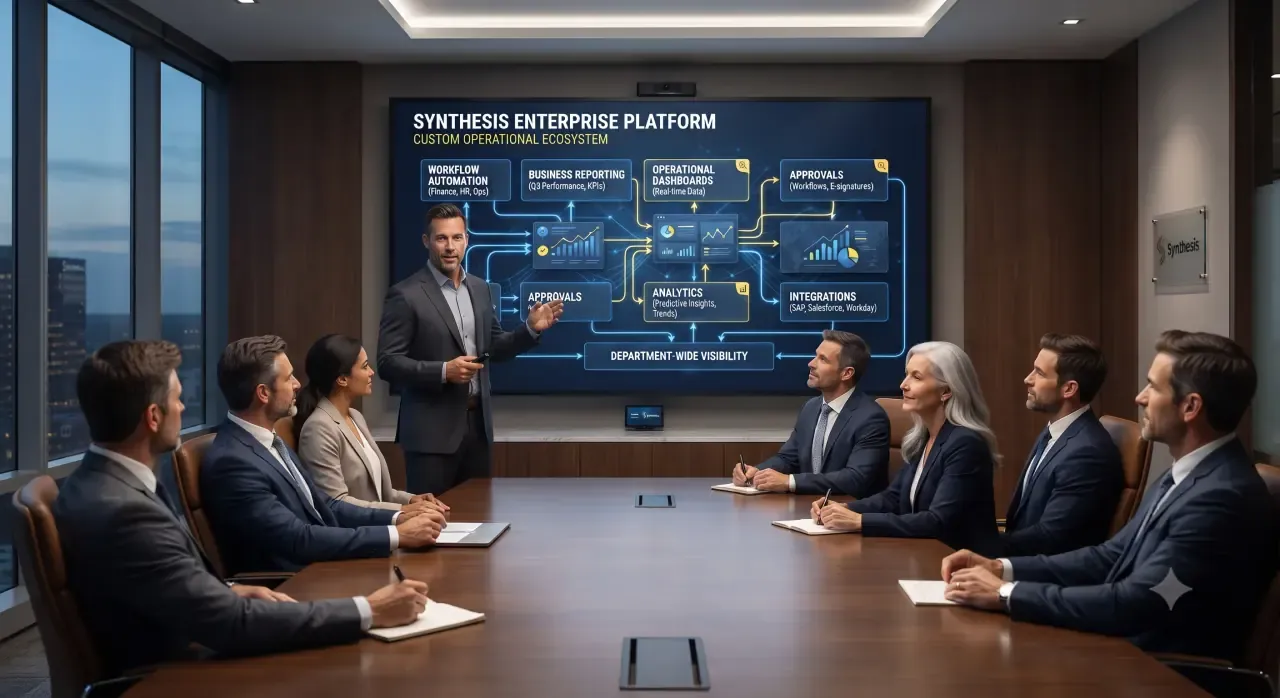
Systems that support growth instead of slowing it down.
The organisations preparing successfully for 2027 are not waiting until operational problems become impossible to ignore.
They are improving the foundations now, making everyday work easier for employees while creating a business that is better equipped for future growth.

Yokendra Kumar P
DevOps Engineer
Yokendra Kumar P is a DevOps Engineer with approximately two years of experience in cloud infrastructure, Kubernetes operations, and delivery automation. He works with AWS EKS and DigitalOcean DOKS, using tools such as Terraform, Helm, Jenkins, Argo CD, Docker, and Vault. His experience includes infrastructure automation, GitOps deployments, observability, and DevSecOps practices. He focuses on improving the reliability and efficiency of cloud-native applications through repeatable deployments and well-managed infrastructure.
Professional Experience: Approximately 2 years.
Industry and Project Experience: Cloud infrastructure, DevOps, platform engineering, Kubernetes operations, and DevSecOps.
Technical Expertise: AWS EKS, DigitalOcean DOKS, Kubernetes, Terraform, Helm, Jenkins, Argo CD, Docker, Vault, observability tools, CI/CD automation, and GitOps.