
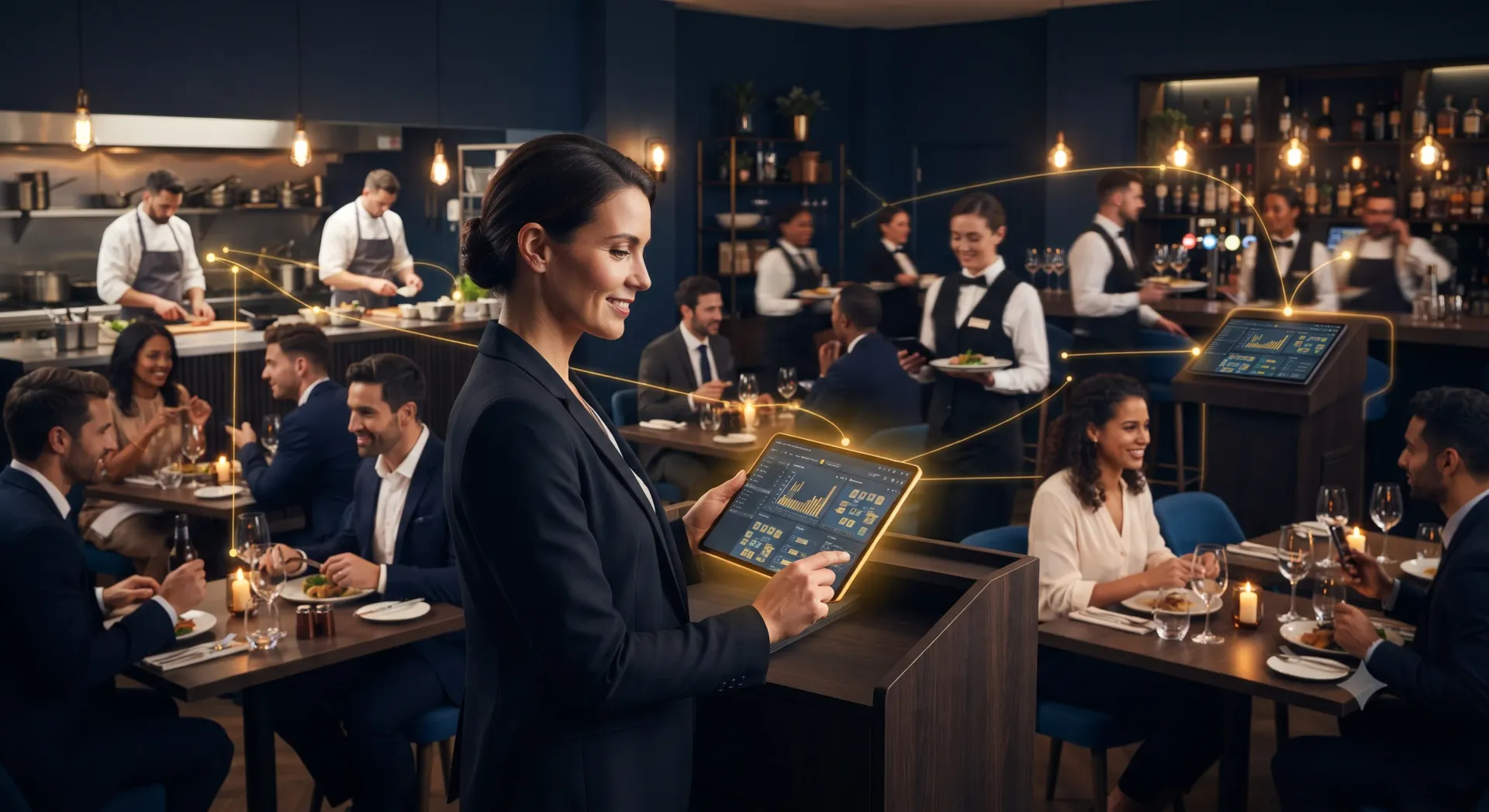
Why UK Restaurants Are Rethinking Technology Investments in 2026

By Rajesh S
Software Engineer – QA Tester
Quick Summary
Running a restaurant has never been easy. Rising costs, staffing pressures and changing customer expectations have made it even harder. While many restaurants already use technology, a lot of day-to-day work still depends on disconnected systems and manual processes. This guide looks at where that technology gap comes from and why more restaurant businesses are trying to close it.
Walk into almost any restaurant today and you'll see technology everywhere.
Orders come in through tablets.
Payments happen digitally.
Online delivery platforms keep bringing in new orders.
Stock is tracked somewhere. Staff schedules live in another system. From the outside, everything looks fairly modern. But that's only part of the picture.
Behind the scenes, many restaurant teams are still doing a surprising amount of work by hand.
Managers copy figures into spreadsheets. Staff switch between different apps during a shift. Someone spends time matching online orders with internal records.
None of those jobs take very long on their own.
Together, they quietly eat into the day.
That's the gap many restaurants are starting to notice.
It isn't that they don't have technology.
It's that their technology often works separately instead of working together.
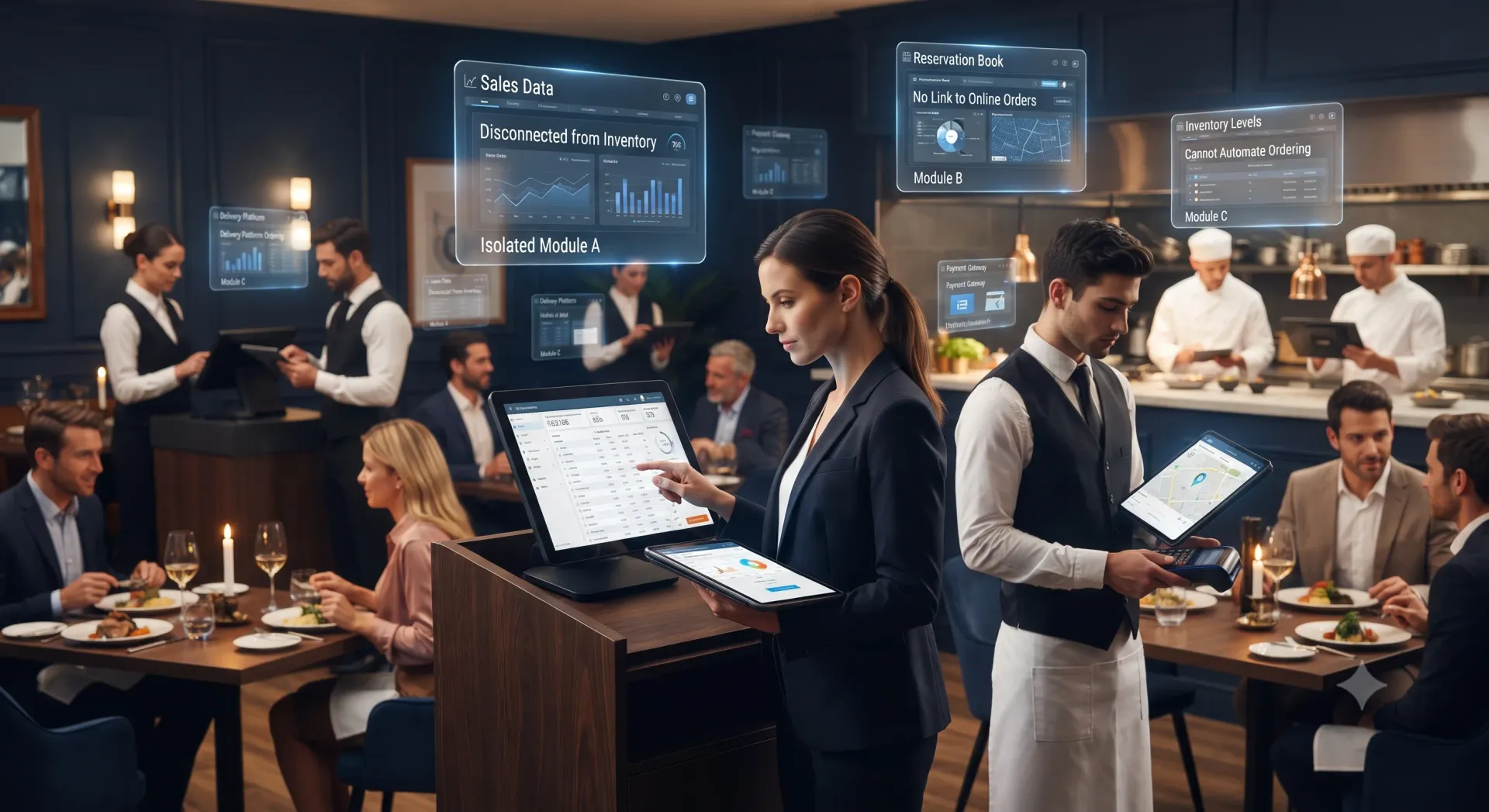
Restaurants Already Use Technology
A few years ago, adding technology often meant introducing online ordering or digital payments.
Today, most restaurants already have those basics in place.
The challenge has moved somewhere else.
As businesses grow, they often add new software whenever a new need comes up.
- A booking platform.
- A delivery partner.
- A payroll system.
- Inventory software.
Each one solves a particular problem.
Over time, though, it can leave staff jumping between several systems just to get through a normal shift.
That usually isn't anyone's plan.
It simply happens as the business grows.
The Problem Is That Systems Don't Work Together
Restaurant teams move quickly.
Nobody wants to stop and update three different systems while customers are waiting.
But when those systems aren't connected, that's exactly what happens.
The same order gets entered more than once.
Stock numbers aren't always up to date.
Managers spend time checking information instead of running the restaurant.
These aren't huge problems on their own.
They just happen often enough to slow everything down.
That's why more restaurants are looking at connected software instead of adding yet another platform.
Manual Work Builds Up Faster Than People Notice
Most restaurant owners don't wake up thinking they need automation.
They usually notice something else first.
Closing reports take longer.
Staff spend more time on admin.
Inventory checks become harder to keep up with.
Questions that should have quick answers suddenly need somebody to dig through different systems.
It's often a collection of small frustrations rather than one big problem.
That's also why business process automation has become more common in hospitality.
Not because restaurants want to remove people from the process.
Because repetitive work doesn't always need someone's attention every single time.

Better Information Leads To Better Decisions
Restaurant owners make dozens of decisions every day.
Should more staff be added for the evening?
Is stock running lower than expected?
Which menu items are performing well?
The answers usually exist somewhere.
The difficulty is bringing everything together quickly enough to be useful.
When systems share information, managers spend less time looking for updates and more time acting on them.
That makes everyday decisions a little easier.
Especially during busy service.
Closing The Technology Gap Doesn't Mean Replacing Everything
One of the biggest misconceptions is that improving technology means starting from scratch.
In most cases, it doesn't.
Many restaurants already have good systems.
They just weren't designed to communicate with each other.
Connecting existing software often delivers more value than replacing everything.
It also causes much less disruption for staff who already know the tools they use every day.
How Trudosys Helps Restaurant Businesses
Every restaurant operates differently.
Some need better reporting. Some want to connect ordering, inventory and finance.
Others are trying to reduce repetitive administrative work.
That's where Trudosys starts.
Instead of recommending the same solution to everyone, the first step is understanding how the restaurant already operates.
From there, software can be built or integrated around those everyday workflows, making operations smoother without forcing teams to completely change how they work.
Frequently Asked Questions
Final Thoughts
Most restaurants don't have a technology problem.
They have a connection problem. The software is already there. The information is already there.
It just doesn't always move between systems as easily as it should.
Closing that gap isn't about chasing the newest technology.
It's about making everyday operations simpler, giving staff fewer manual jobs to deal with, and helping managers spend more time running the restaurant instead of running the software.

Rajesh S
Software Engineer – QA Tester
Rajesh S is a Software Engineer specializing in quality assurance, with more than one and a half years of experience testing web and mobile applications. His work covers manual testing, test automation, API validation, and performance testing. He designs and executes test cases, performs functional and regression testing, and documents defects for development teams. Using tools including Selenium, Appium, Postman, and JMeter, he helps teams assess application behavior and improve software reliability before release.
Professional Experience: More than 1.5 years.
Industry and Project Experience: Software testing and quality assurance for web applications, mobile applications, and APIs.
Technical Expertise: Selenium WebDriver with Java, Appium, Cucumber BDD, TestNG, Rest Assured, Postman, SQL, Jira, and JMeter; manual, functional, regression, automation, API, and performance testing.